2018
Introduction
From the previous study on conditions of daylight of a typical shophouse, Fusinpaiboon and Jang found that typical Thai shophouses can receive enough daylight as a type of residential buildings. There was no significant difference in accessing daylight among building orientations although south and south- facing orientations indicated about 10% more daylight access. However, the unequal daylight distribution is an issue due to the narrow and deep floor plan. It is found that the daylight access was dramatically decreased from 3 – 3.5 m away from the façade. This means that some activities that require more than 300 lux of illuminance levels should be located within the area. For this reason, space layout should be carefully made in considering these conditions.
This study is about a daylight analysis of a shophouse before renovation. The study reports about our analysis of daylight conditions before the renovation.
Daylight Analyses
This analysis used two daylight measures: illuminance levels and daylight autonomy. Illuminance levels help to identify the worst conditions of the daylight, while daylight autonomy is useful to evaluate the daylight access through the year as it uses hourly-based climate data.
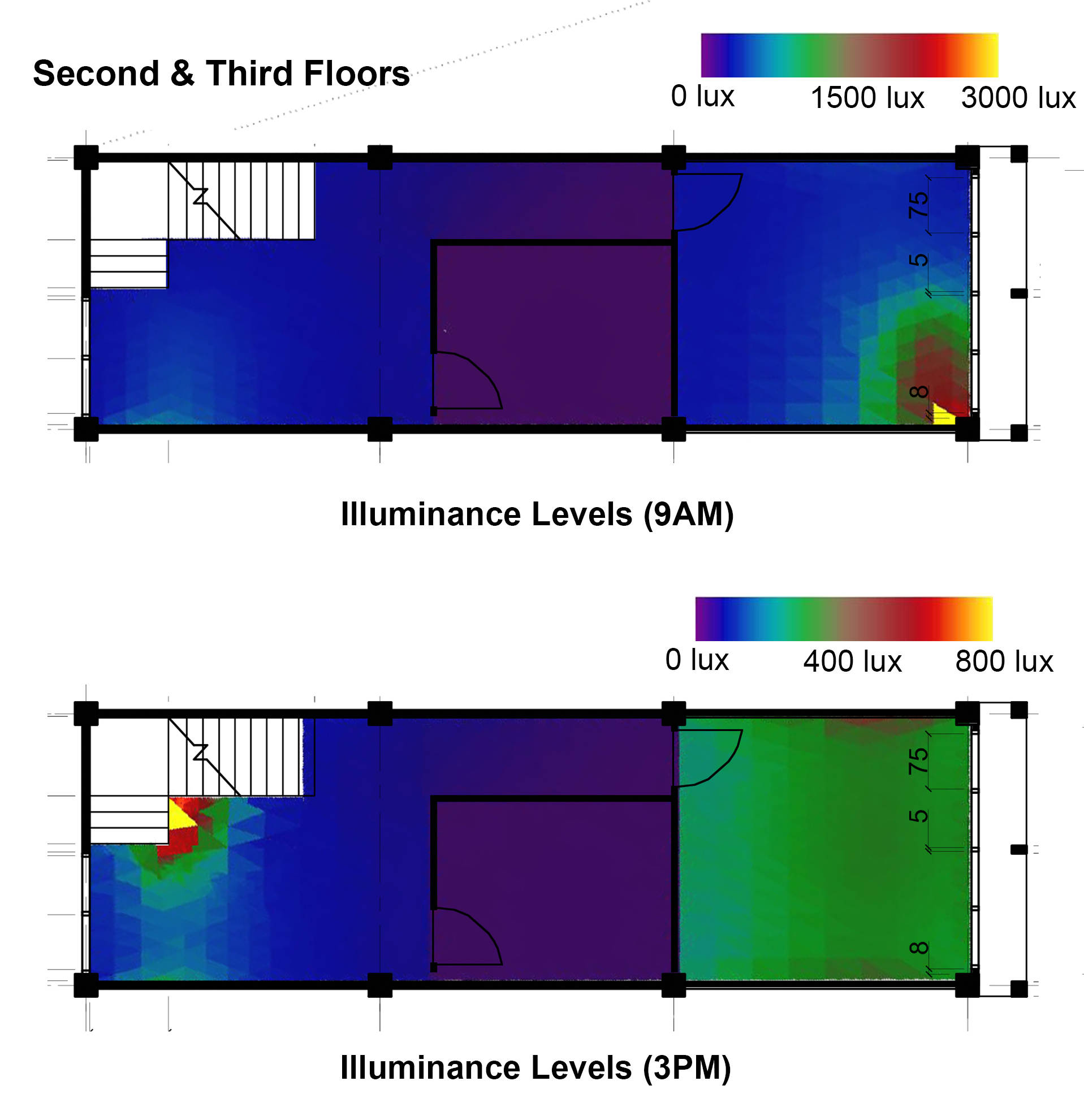
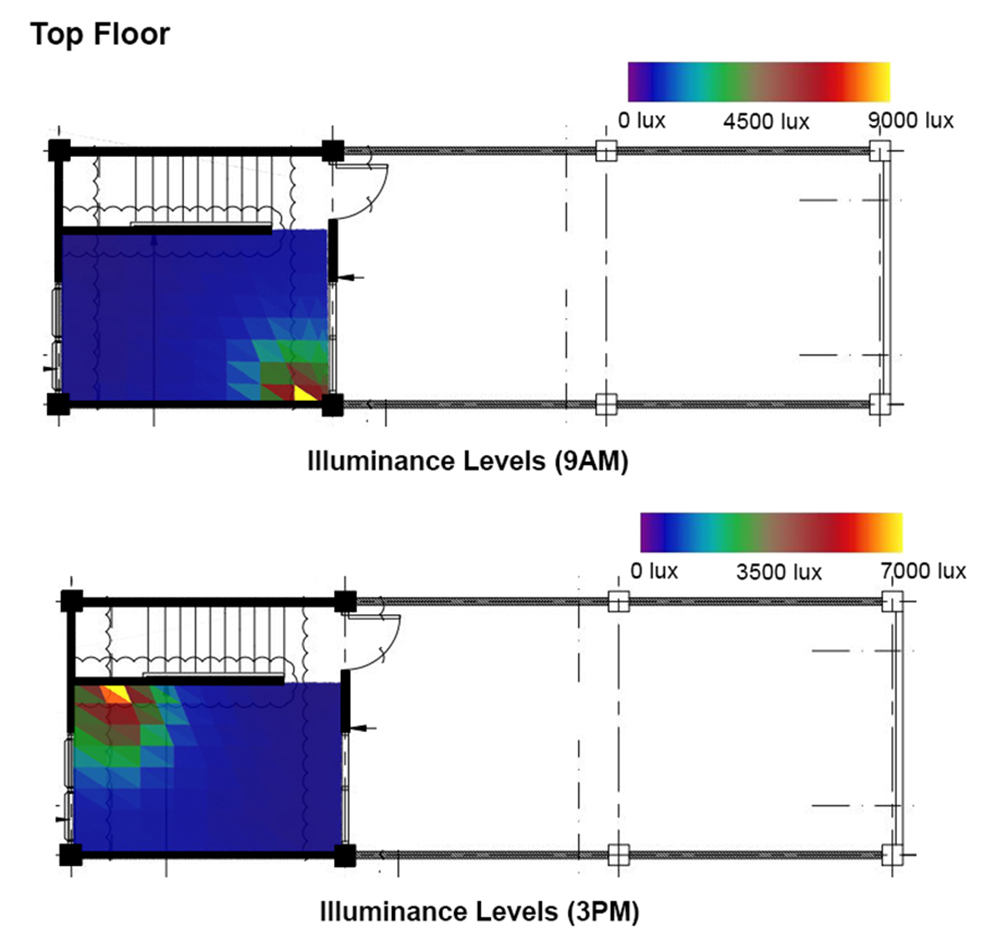
Illuminance levels specifically demonstrate brightness of the spaces. The method is to check whether % of the complied area with the minimum 150 lux, only for residential buildings, exceeds the thresholds. It measures twice on a day at equinox when the sun has low angles at 9 AM and 3 PM.
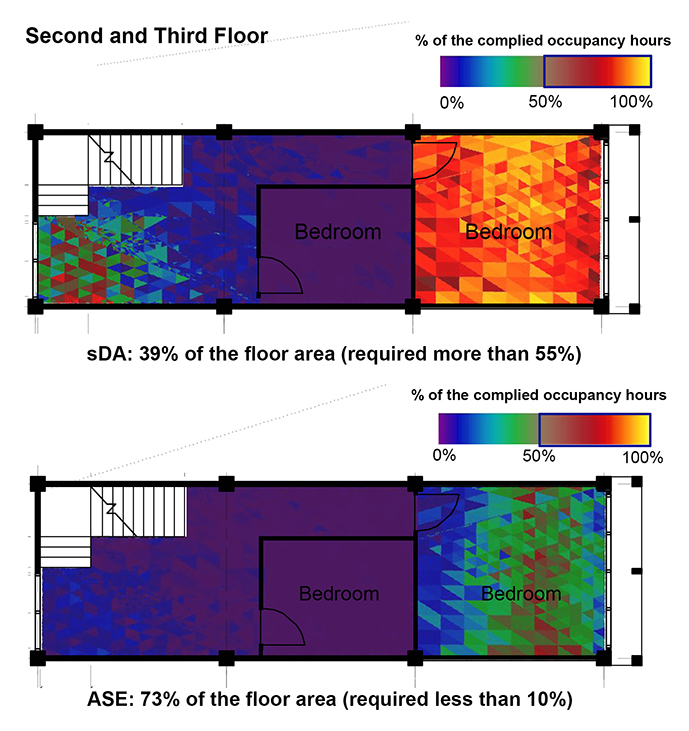
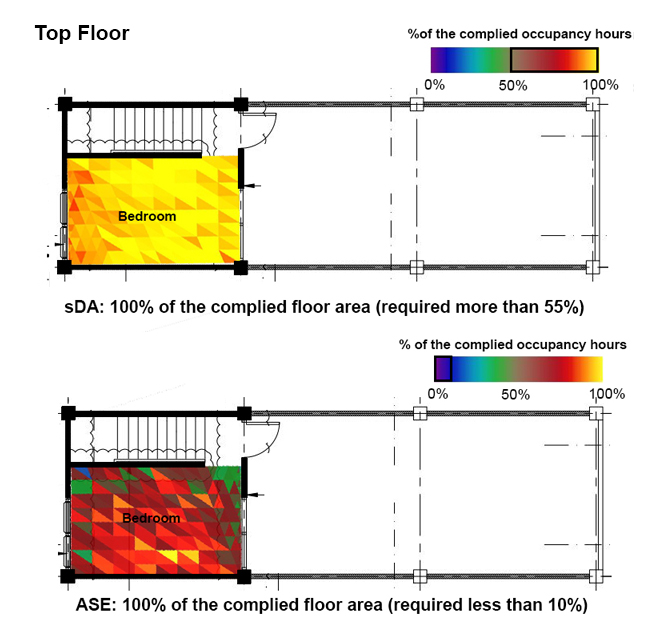
Daylight autonomy evaluates the daylight conditions regarding enough but not excessive illuminance levels for satisfactory hours. Thus, it measures two factors: (1) sDA to be more than 50 % of the complied floor area that receives higher than 300 illuminance levels for 50 % occupancy hours; (2) ASE to be less than 10 % of the complied floor area that receive higher than 1000 illuminance levels for more than 250 hours. Therefore, this method can be adequately suitable for office buildings but not for residential buildings as it requires the illuminance levels to be more than 300 lux as the minimum, which may not be necessary for general activities in residential buildings. Regardless of the compliance, this method can help to identify daylight conditions through the year.
Site – Location & Orientation
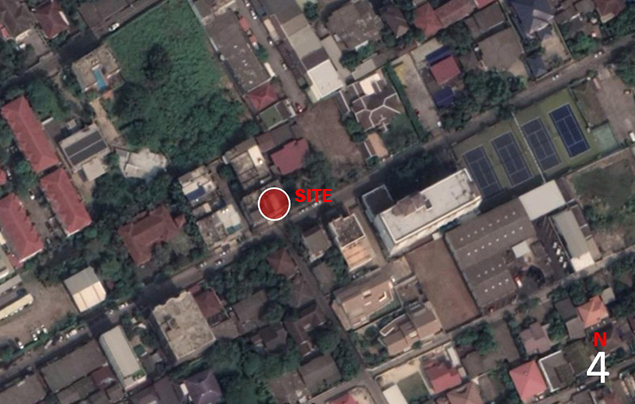
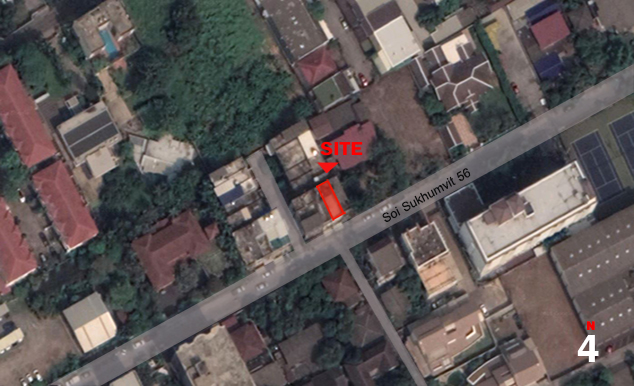
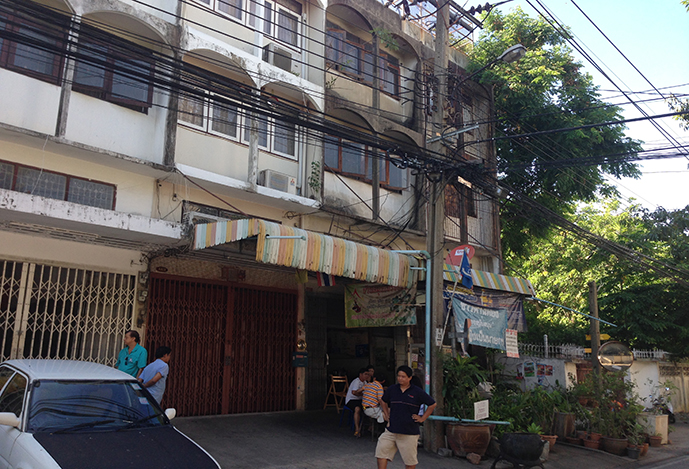
The shophouse is in the middle of Soi Sukhimvit 56 that is a small road about 8 m, emerged from the main Sukhumvit road. The shophouse is the second unit of a shophouse row with total five units. In front of the house, there is a three-way intersection so that there is a certain amount of passing by traffic. The shophouse faces South-East direction, which is one of the most beneficial orientations to receive daylight. As there is a wide-open view in front of the house through the three-way intersection, daylight access is expected to be even better than other shophouses with the same orientation. However, the back of the house faces aside of another shophouse row. There is only 2 m distance with a small backyard, which are commonly transformed as indoor kitchen at other shophouses.
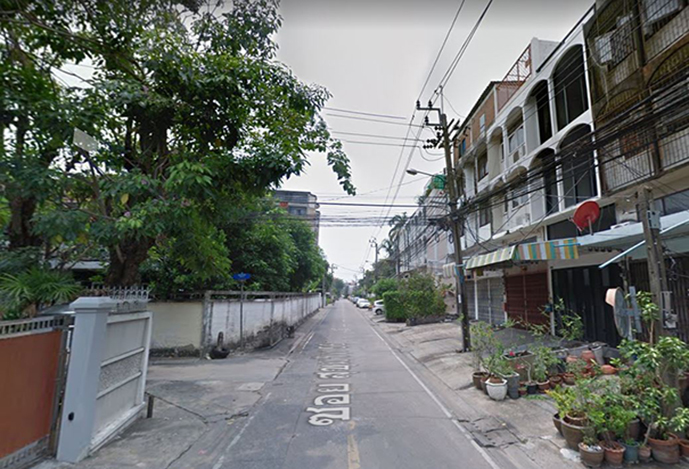
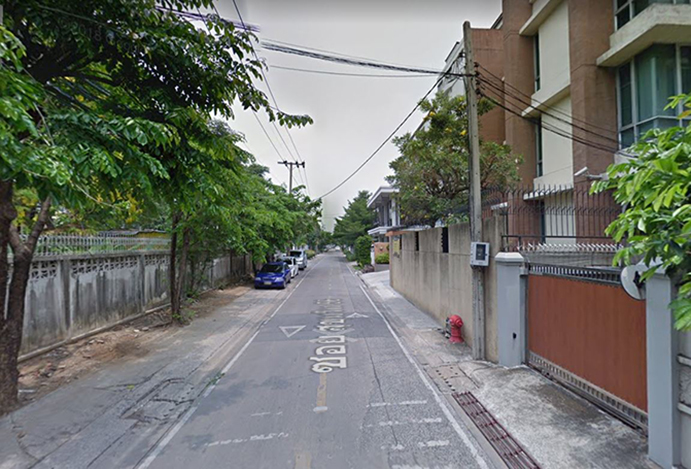
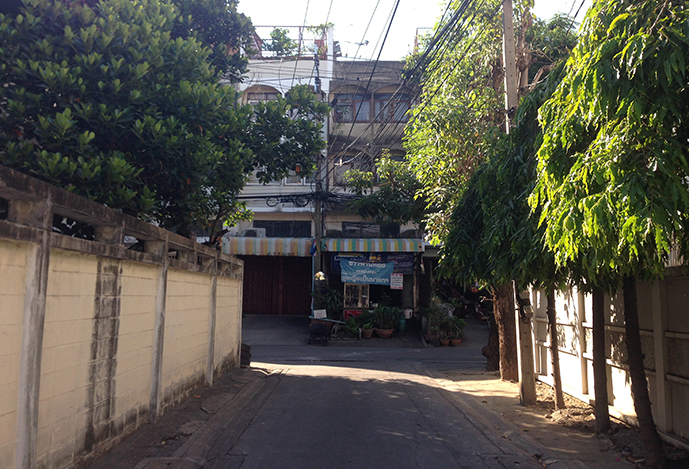
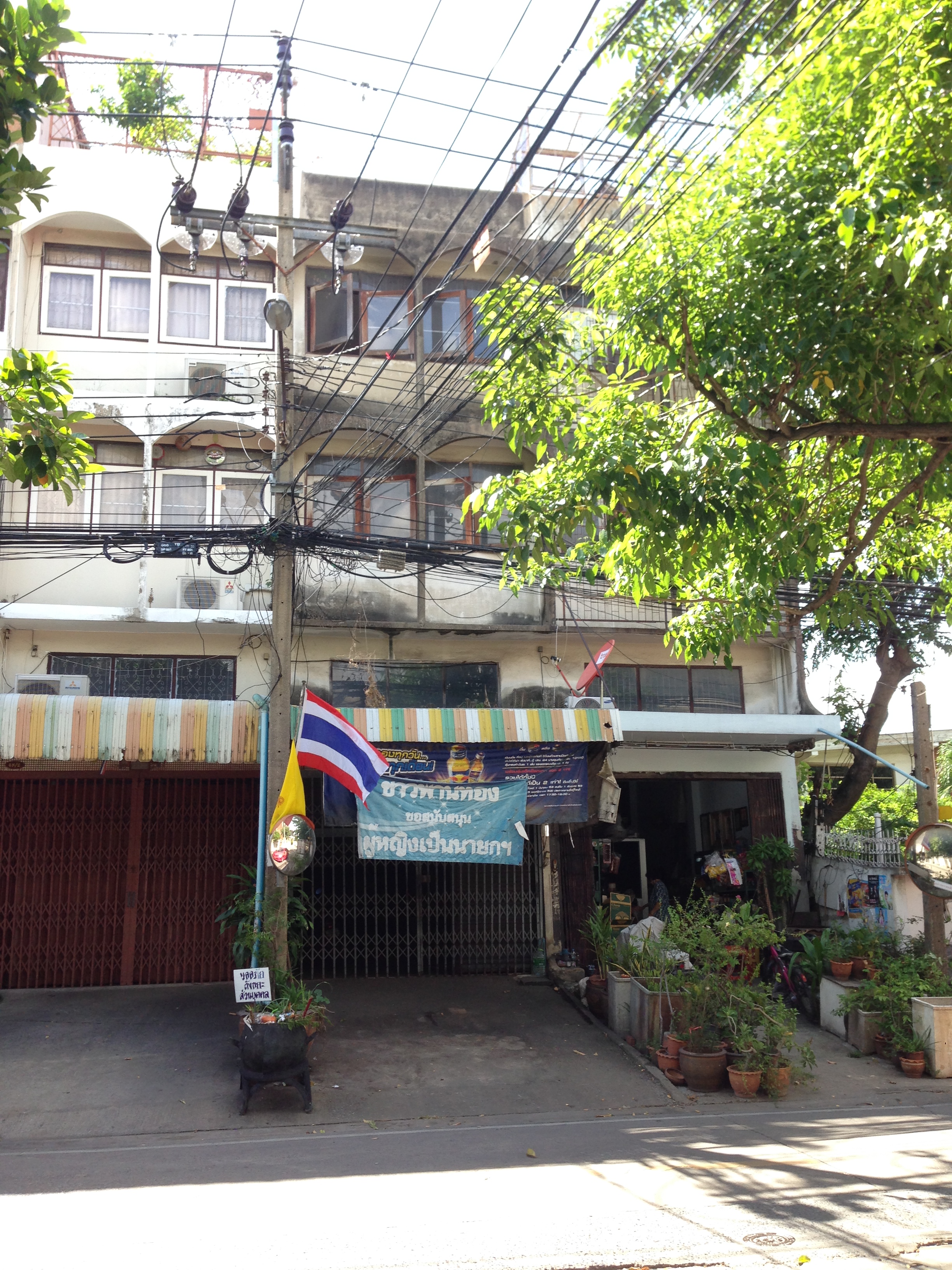
Existing Daylight Conditions
This 3.5-floor shophouse is one of the typical styles in Thailand. The ground floor was used as a shop so that the small backyard was blocked to have a kitchen and toilet. The upper four floors were used as a residential area having six bedrooms and one toilet. The mezzanine had one bedroom and toilet, while the second and third floors had two bedrooms with no toilet. The top floor had one bedroom using one bay of the floor. The other area was an accessible flat roof.
Ground Floor
1) Space Use
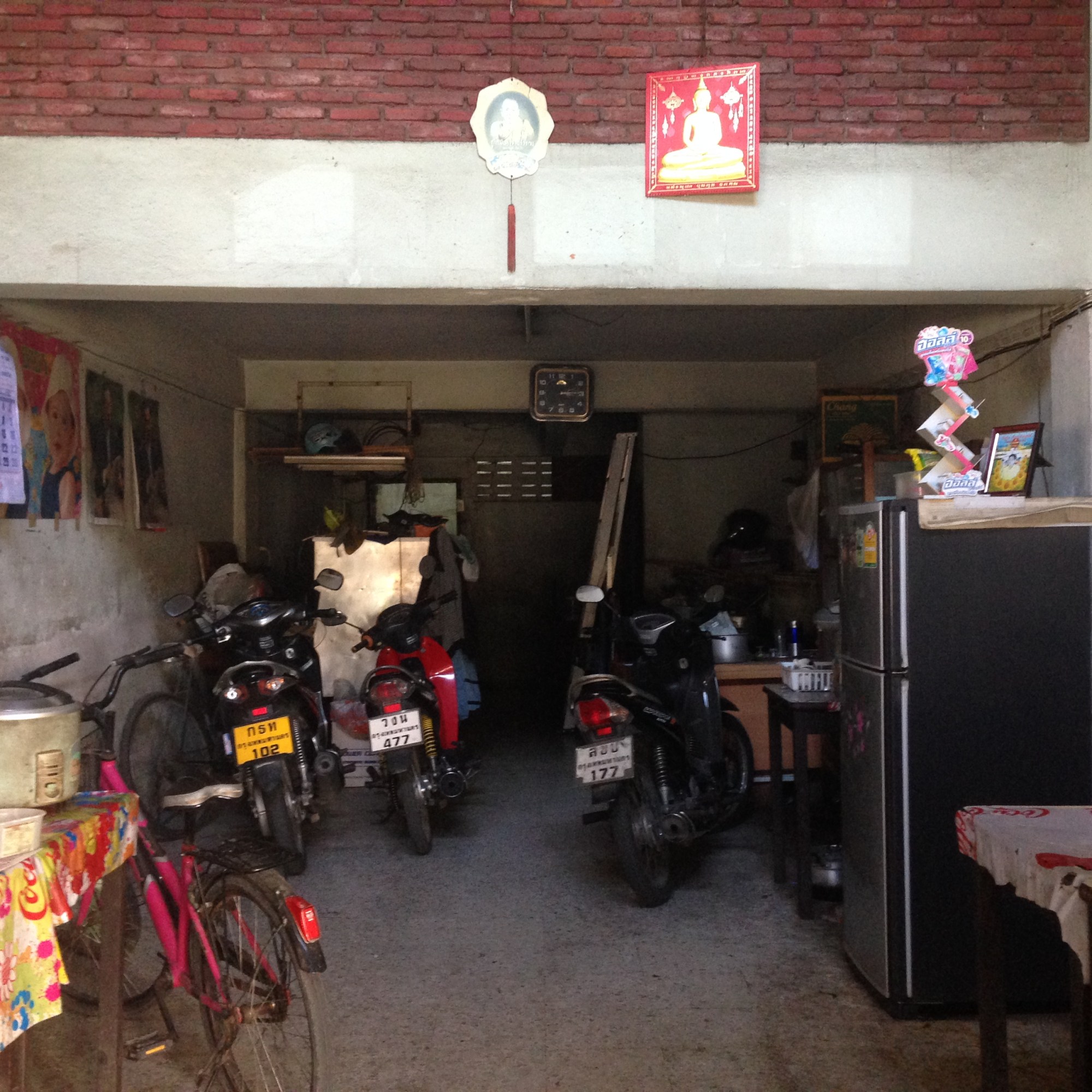
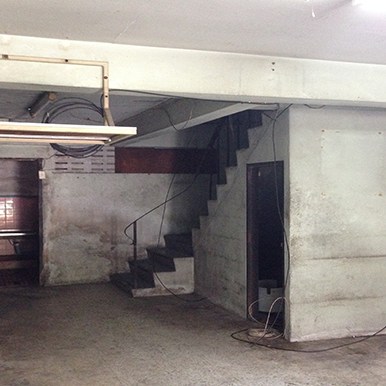
The front bay from the entrance had high ceiling about 5.5 m, while the ceiling height of the middle and third bays was 3 m. The front and middle bays were used as the main eating area in the shop. The last bay, where the staircase was, was a multi-purpose space not only for vertical circulation but also for storing things and even motorbikes. As the back of the floor, the house owner transformed the small backyard (w 3.7m x d 1.8m) into the kitchen and toilet.
2) Daylight Analysis
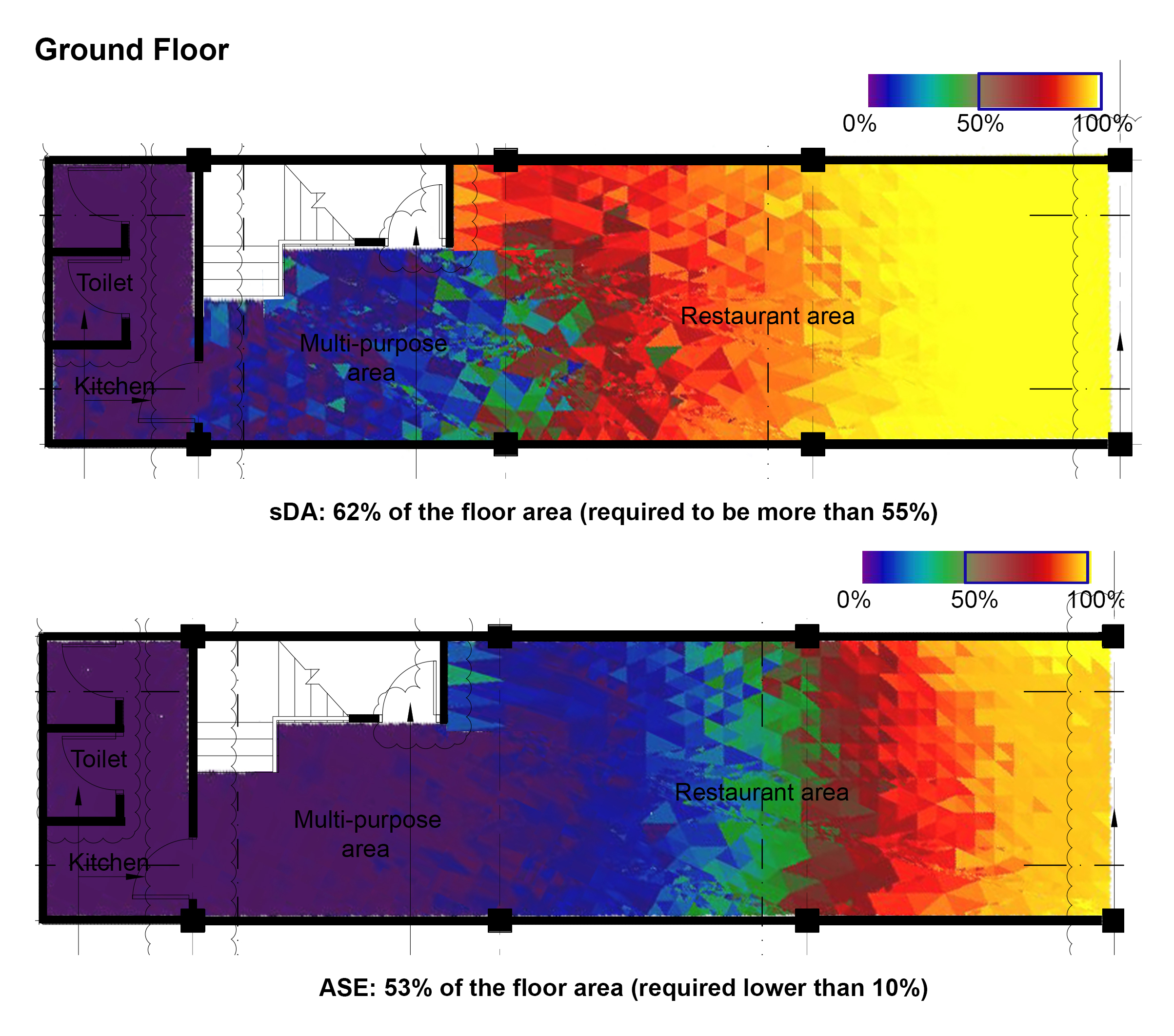
The ground floor has a greater daylight condition than others as it always opens the front door for restaurant business. The first two days are used for restaurant spaces, while the third bay and the extension are used for circulation and kitchen, respectively. In considering this condition, 62% of the floor area shows compliance for the brightness throughout the year (sDA). Especially, the first and second bays have no issue with the brightness. However, the first bay can be exposed to excessive daylight. As ASE result indicates, the first bay would receive more than 1000 lux for almost all year that can result in glare issues. For this reason, shading is necessary. This issue with the second bay is relatively less than the first bay even though it exceeds the threshold, 10%.
The third bay and extended kitchen have a problem with low levels of illuminances for almost all year. This issue is especially critical for the kitchen as it needs more than 500 lux as the minimum, according to references. Reversely, these two areas would not have a problem with the glare issue. The result shows that artificial lighting is necessary for most of the time, which will increase energy consumption.

Mezzanine Floor
1) Space Use
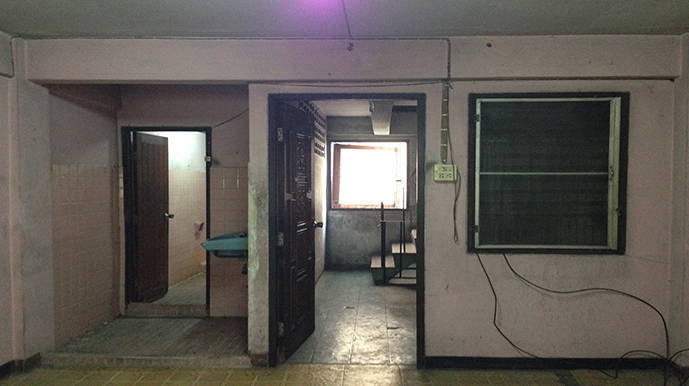
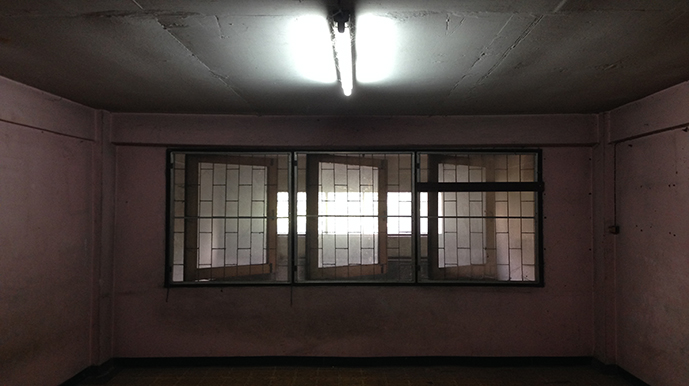
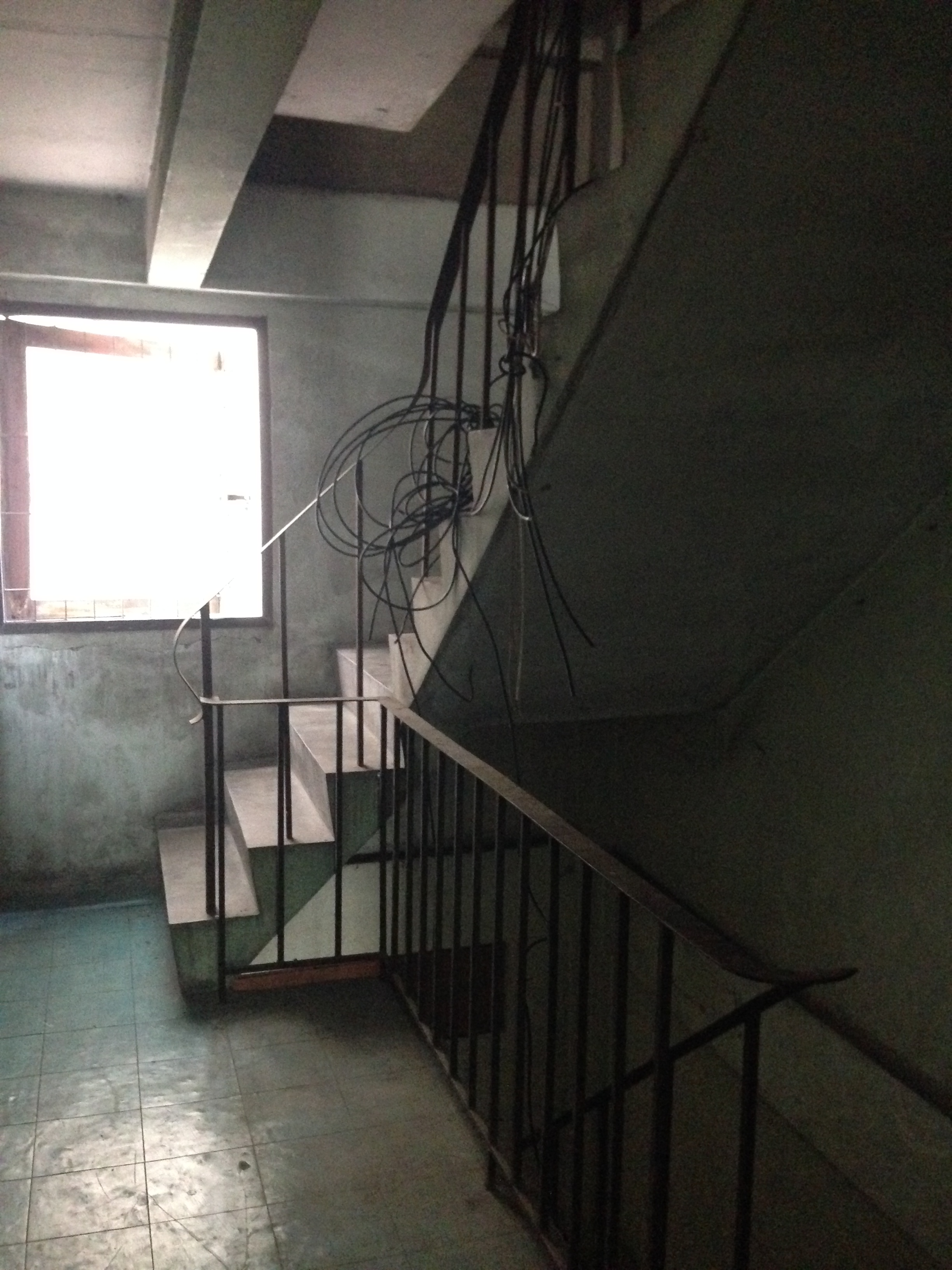
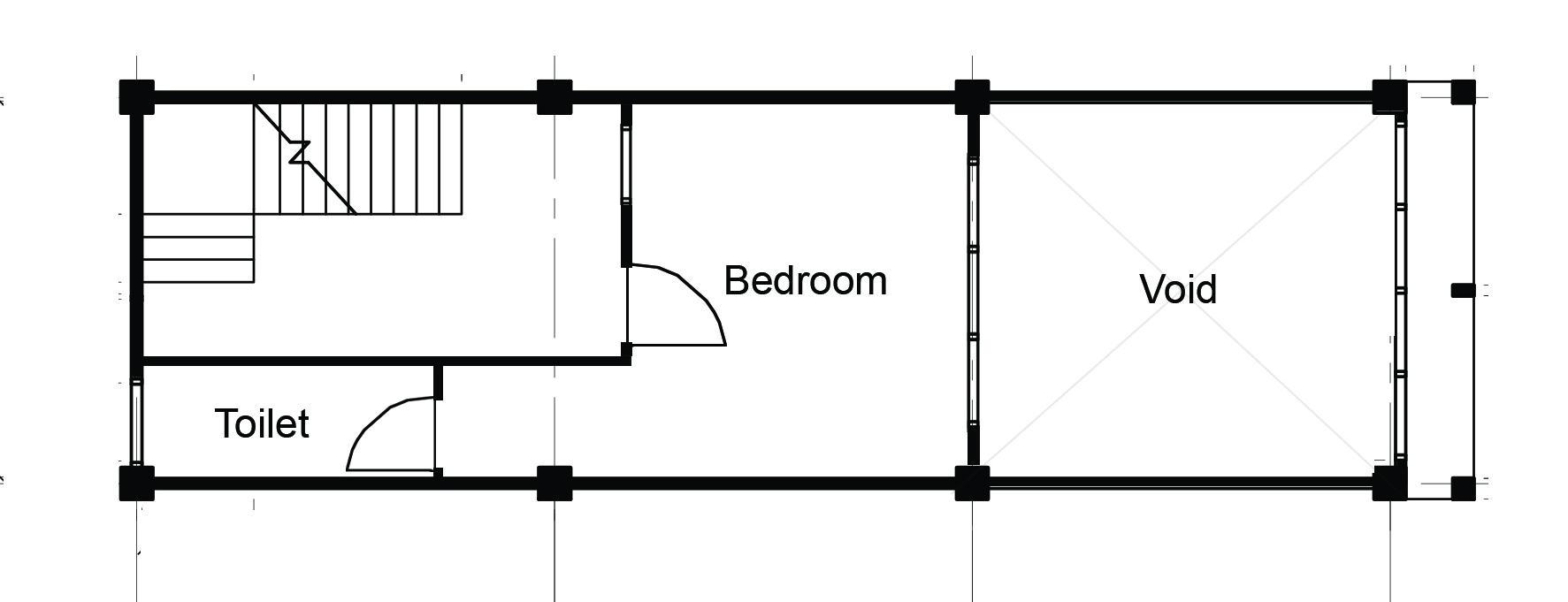
The Mezzanine floor had a two-bay (the middle and last bays) indoor space as the front bay was open for the ground floor. The middle bay near to the main façade was used as a bedroom, while the last bay had one small toilet and was used for vertical circulation through stairs. The bedroom had about windows facing the main façade, but the daylight access was more likely depended on the outer façade due to the high ceiling for the ground floor. The partition between the two bays was made by thin plywood. There are two wooden doors and one window. The window was used for daylight as it was blocked by a sheet of paper.
2) Daylight Analysis
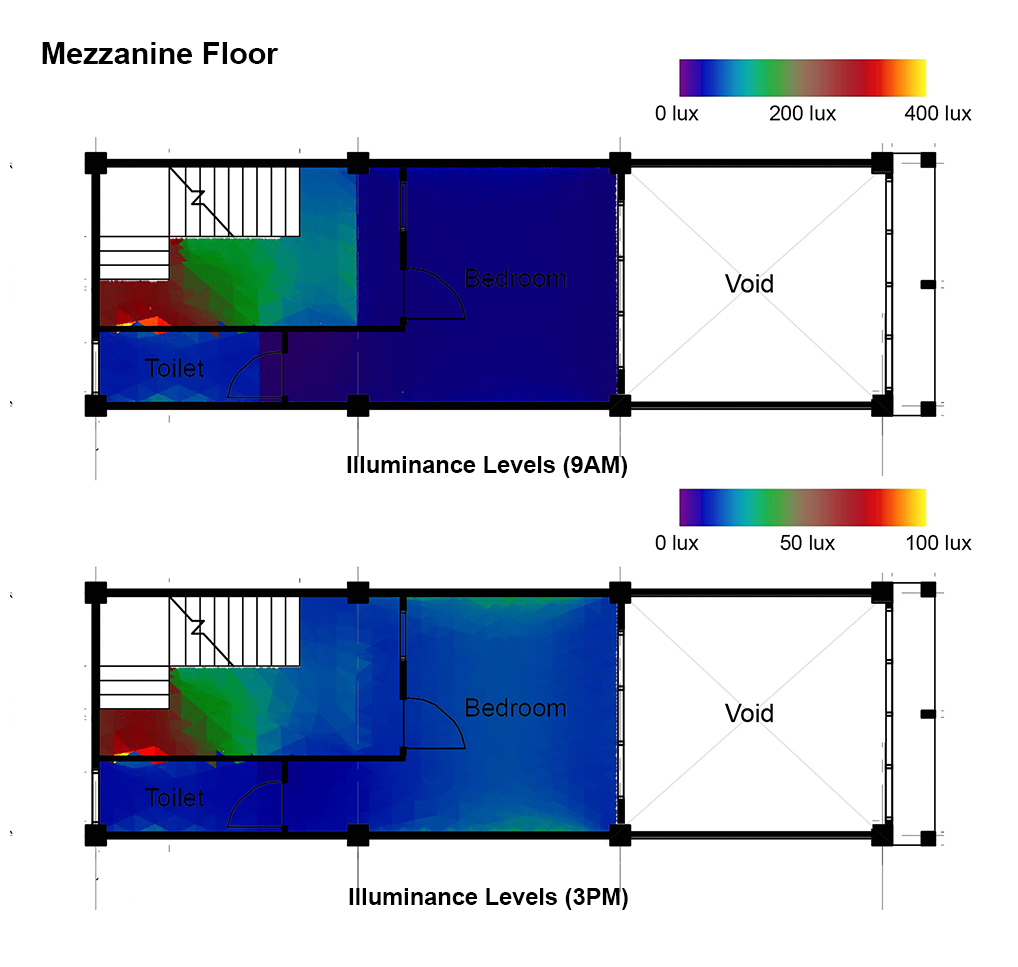
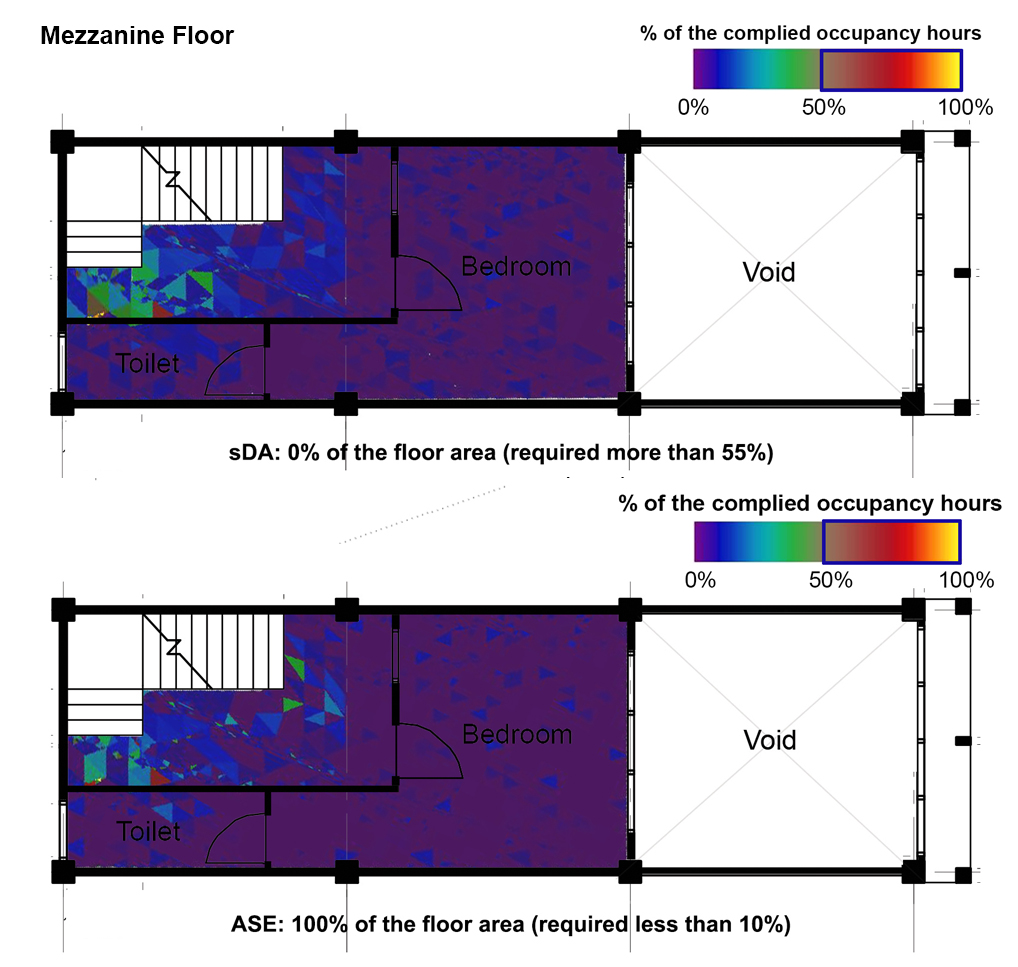
This floor has a bedroom and toilet that is the first floor of the residential area. The daylight results demonstrate that the whole occupied area suffers from insufficient daylight access. Illuminance measure represents that most of the floor area does not meet the minimum 150 lux, even though the corridor shows relatively better daylight conditions through the window at the back façade.
It is also shown in the result of daylight autonomy as 0 % of sDA. Main reasons for the result are firstly the first bay as a void area and partitions. As seen on the ground floor, the first bay is the best location to receive the daylight. However, with the void, the reflected daylight and direct daylight mostly give an impact on the ground floor rather than the mezzanine floor.
There is a small daylight window on the partitions. However, as shown in the figures, the impacts on bringing daylight into the bedroom are extremely limited. The daylight from the small opening on the back façade also does not enough. Of course, no issue with glare.
Second & Third Floor
1) Space Use
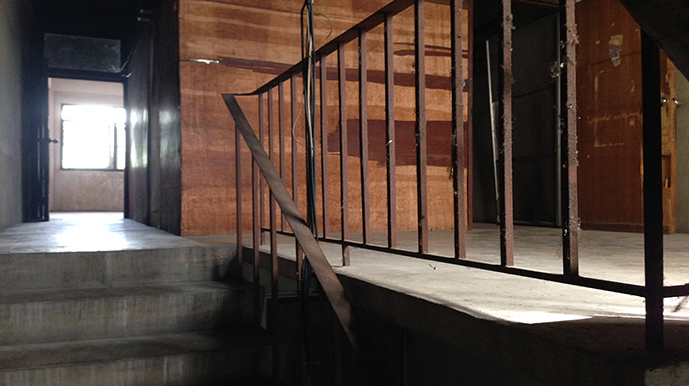
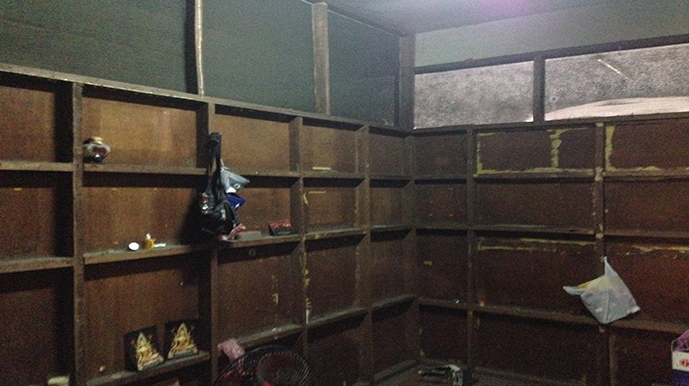
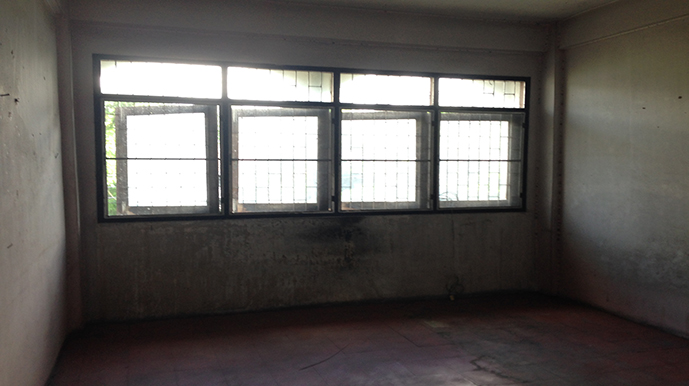
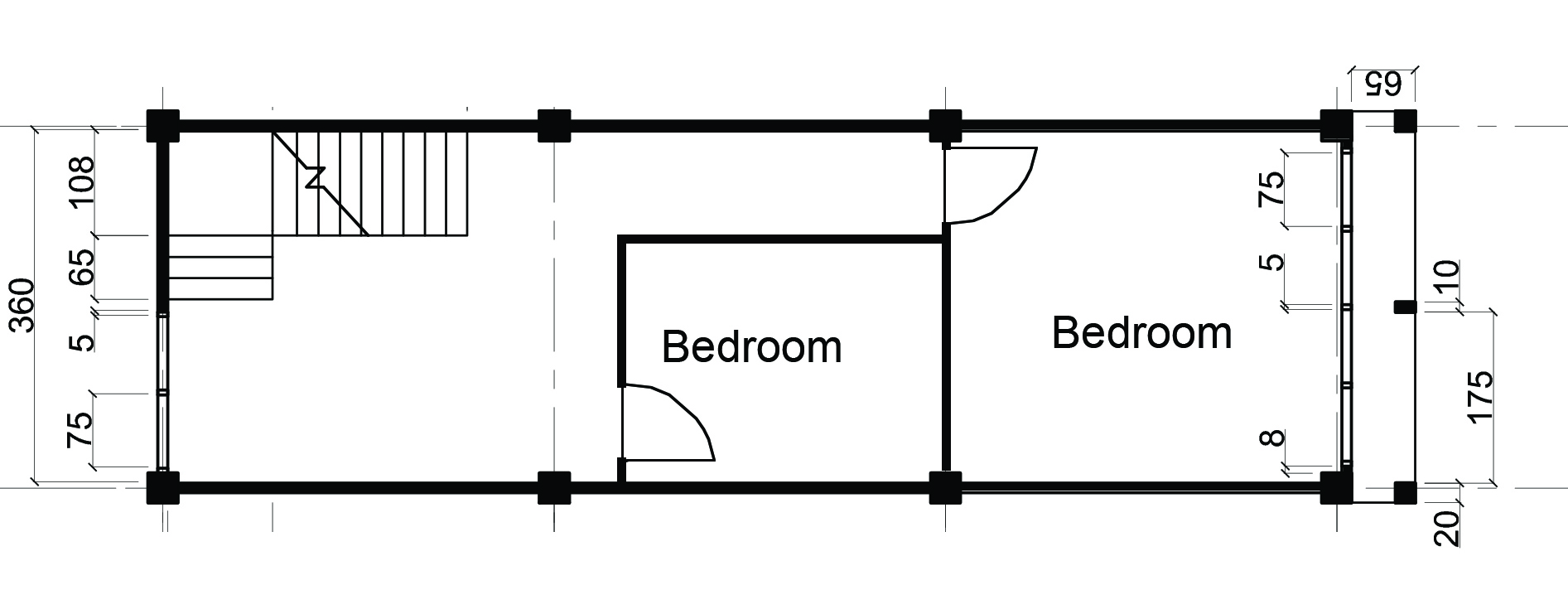
The second and third floors were the main living areas with four bedrooms. The front and middle bays were bedrooms and the last bay has only stairs. No toilet was on these two floors. About 50% of the main façade of the front bay bedroom were glazed. However, the bedroom of the middle bay had a very limited opening area as the partition was made by plywood.
2) Daylight Analysis
These two floors are the main living spaces. It is obvious that the middle bay has a problem with insufficient daylight, while the first and last bays shows relatively better conditions, not fully satisfied though. The bedroom in the second bay, despite having a daylight window on the wooden partitions, receives the much-limited amount of daylight. The first bay can receive enough daylight for most of the occupied hours. However, it can occasionally be excessive as shown in the result of ASE (about 40% of occupancy hours but recommended to be less than 16% or 250 hours). For this reason, shading devices should be considered to reduce this issue.
Top Floor
1) Space Use
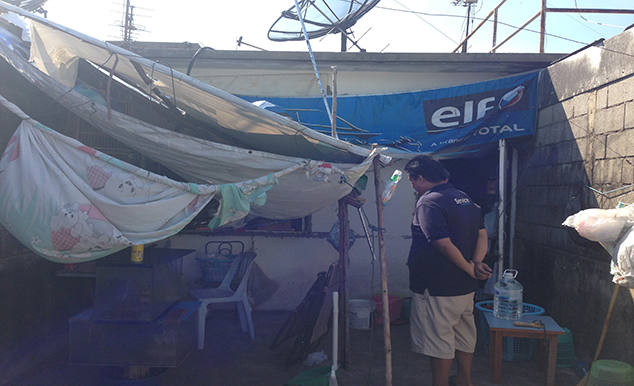
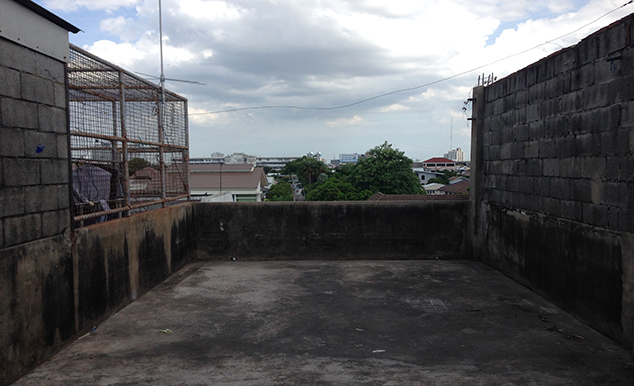
Only last bay was an indoor space, while the other two-bay areas were outside. The neighboured two shophouse units had a longer indoor space so that the outside of the roof was well-shaded.
2) Daylight Analysis
The area can be exposed to the issue for excessive daylight, which needs shading devices or reducing window sizes.
Conclusions
This study is conducted to identify the existing daylight conditions of Sukhumvit 56 project. The main problem of the existing condition is that the current condition does not achieve adequate daylight conditions. In other words, some areas suffer from too much daylight that may cause a glare issue, while other areas can bring about insufficient daylight that may need artificial daylight all the time.
Specifically, the first bay of the house can receive enough daylight throughout the year so that the current space uses as bedroom and dining areas in a restaurant are appropriate. However, there is an issue with glare, which is caused by excessive daylight. Therefore, shading or other strategies reducing daylight access is necessary to minimize it.
The second bay has shown the dramatic decrease of the daylight access. The current space allocation even installed the wooden partitions. Even though the partitions have daylight windows above, they do not deliver daylight in the room efficiently. Thus, the room suffers from insufficient daylight throughout the year.
The third bay has different daylight conditions on each floor. On the ground floor, with the extended kitchen, the area suffers from extremely limited daylight. It should consider bringing more daylight. On the mezzanine, the second and the third floors, it can receive nearly adequate daylight access if the sizes of the window are larger than the current. However, due to space mainly used for circulation, the limited impact can be given. The top floor needs to install shading devices or modify window sizes in order to reduce excessive daylight.
As mentioned above, the existing conditions ask us to deal with excessive and insufficient daylight access at the same time for the same floor. Shading is necessary to minimise excessive daylight on the first bay, while the second bay needs a solution to bring more daylight. During the renovation, various strategies should be carefully considered.
 DRFJ
DRFJ 