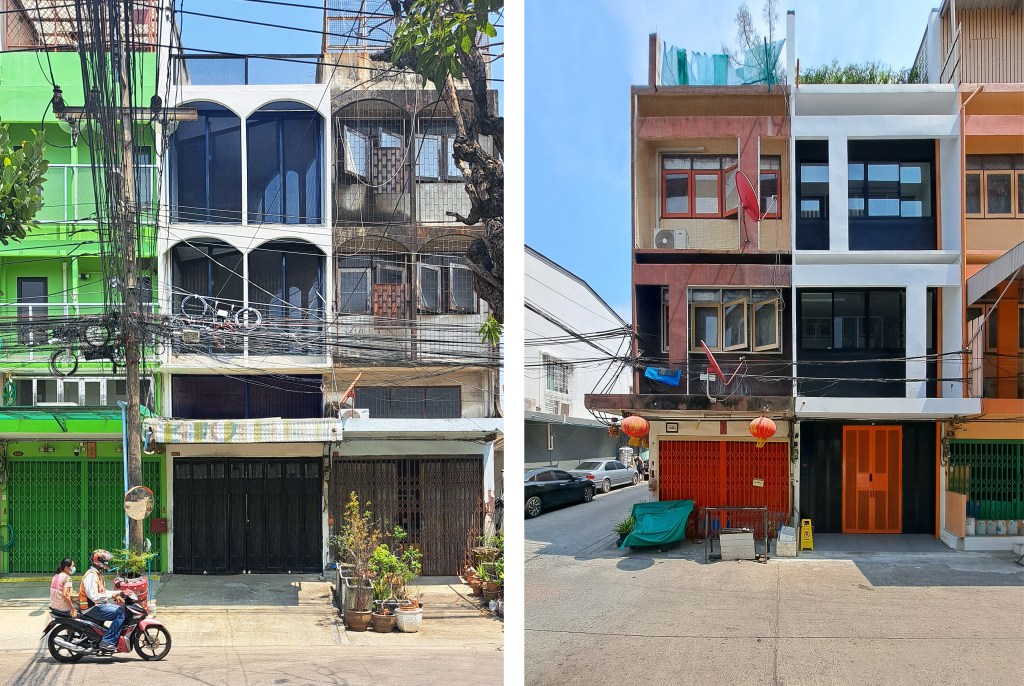
Fusinpaiboon and Jang has been developing a design service called Shophouse2Go! to renovate Thailand’s shophouses to promote wellbeing and to suit contemporary life easily and affordably.
The shophouse is a typical building type of Southeast Asian cities. Shophouses were built in Thailand since the mid-19th century but massively built during the postwar-economic-boom years of the 1960s and 1970s.
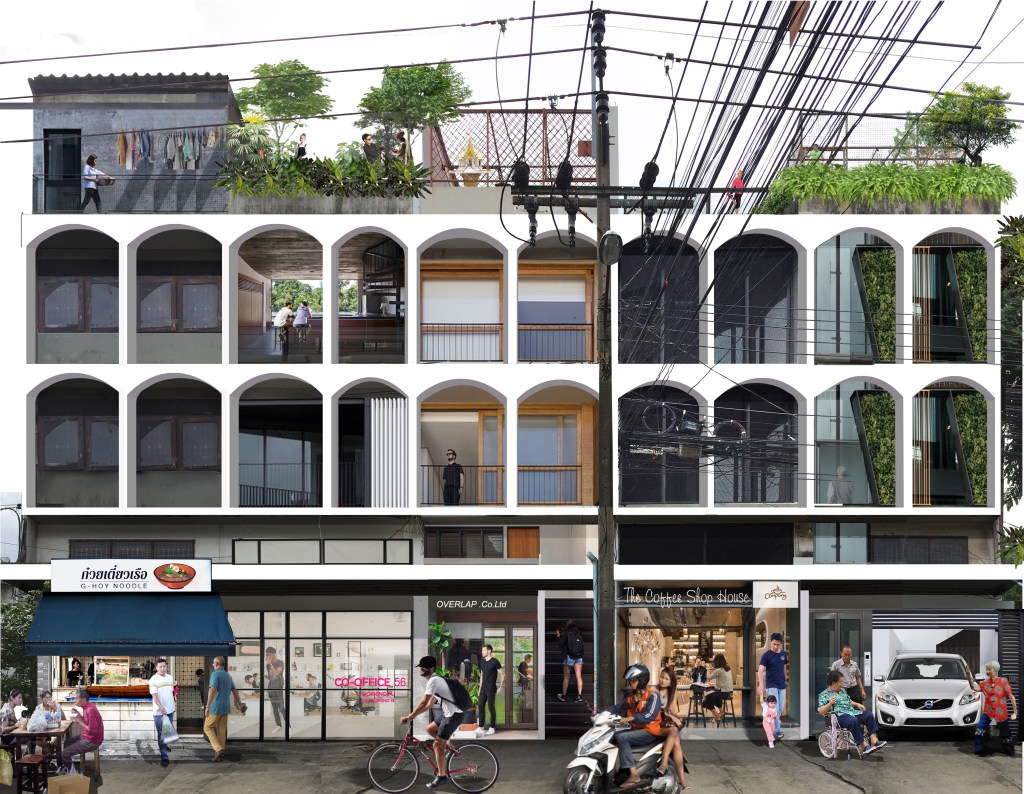
Being simple, standardised, and practical in original plans and construction, many shophouses had beautiful sun-shading elements cast in concrete on their facades. Unfortunately, many shophouses nowadays deteriorate and do not fit many aspects of contemporary urban life. However, they can potentially be renovated to respond to present life styles of both their original and new residents, and benefit the city as a whole.
Shophouse2Go! aims to standardise the process of shophouse renovation by integrating healthy and sustainable materials into efficient planning to create a catalogue for those who want to renovate their shophouses. It aims at providing design options in the catalogue that create good space for living out of existing features and space as much as possible, alter existing structure as little as possible, and save time and budget for renovation as much as possible.
Two prototypes have been constructed. Prototype 1 focused on testing space planning alternatives and combinations in the standardisation process. Prototype 2 was developed for material selections associated with indoor environmental comfort.
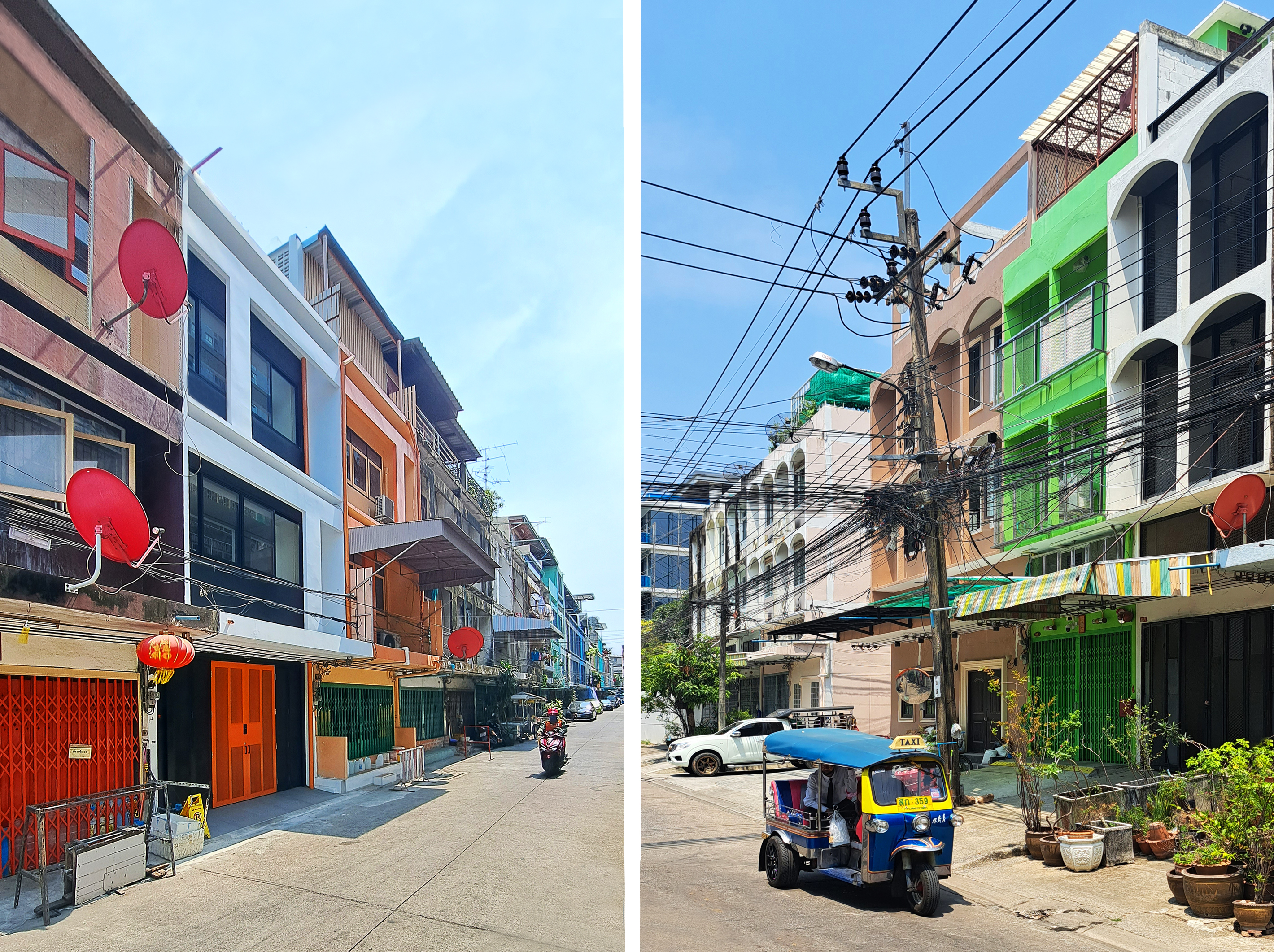
Comparing the facades of Prototype 1 and Prototype 2, both of them maintain the original concrete brise-soleil to provide sun shading, privacy, and maintaining a unified character of the facade of the whole row of shophouses.
The inner layer of front enclosures are, however, changed with different ways according to their conditions and contexts. The original wooden-framed windows on a non-load bearing wall, have been replaced in Prototype 1 with full-height glass sliding doors opening toward nice gardens of the opposite house. An additional layer of steel mesh sliding doors ensure security. The original walls of Prototype 2 have been maintained but windows above them have been changed to double-glass on the second floor and an additional layer of sliding doors have been added on the third floor to reduce noise from the front street.
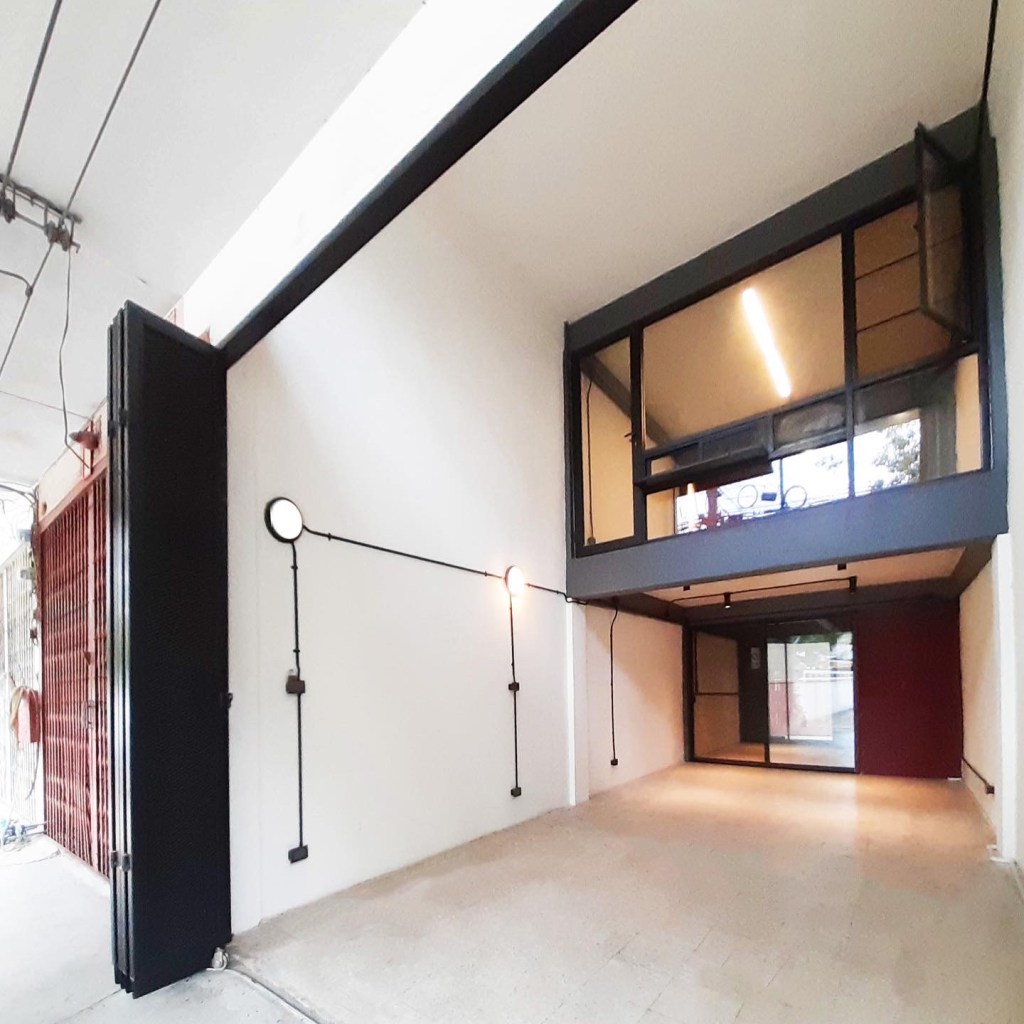
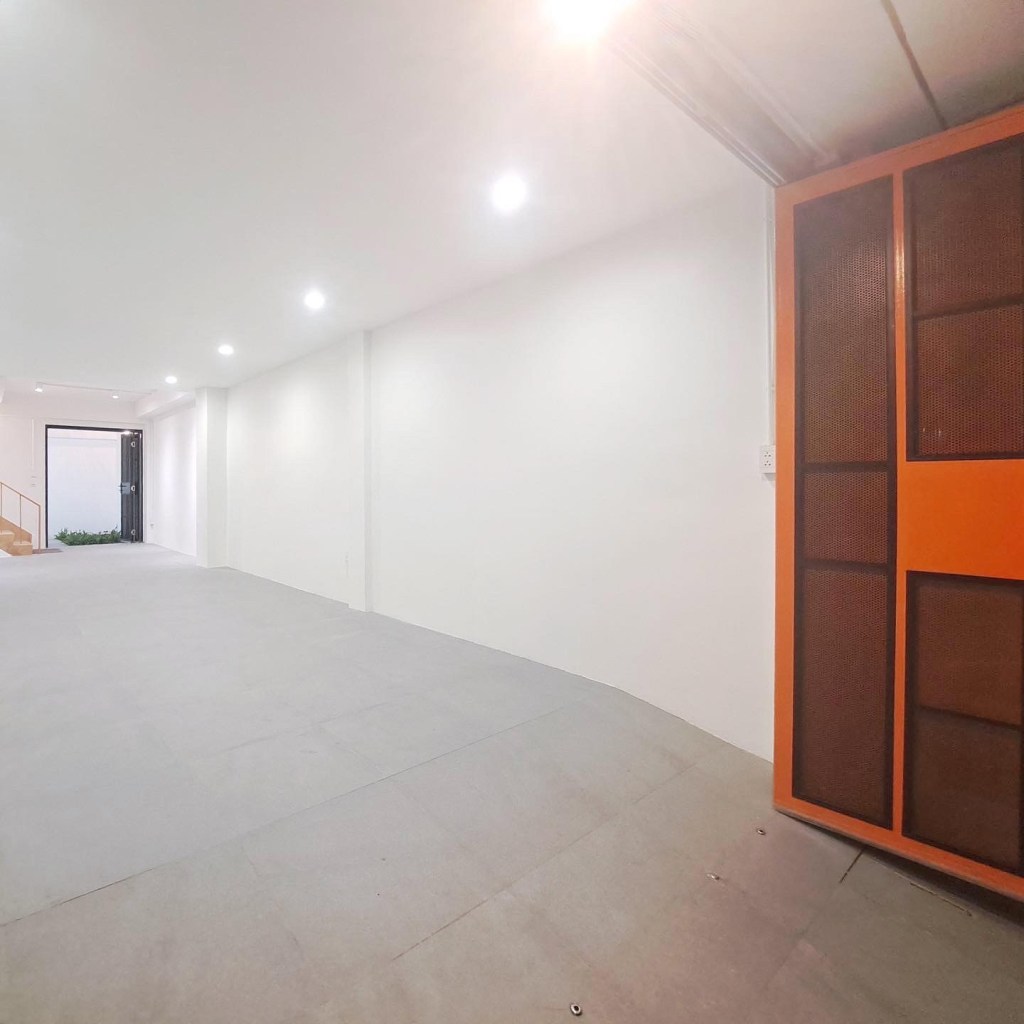
Comparing the ground floor of Prototype 1 and Prototype 2, the above photos show a typical variation of Shophouses built during the 1960s and 1970s in Thailand in terms of ground floor’s space. Prototype 1 (left) has a mezzanine, while Prototype 2 (right) does not. The windows of Prototype 1’s mezzanine create continuity of spaces between different floors, and bring natural light and air into the space. Both prototypes’ backyard, previously covered by an illegally addition of a roof structure, have been opened up to bring natural light in and to let wind flow through the ground floor space to other floors.
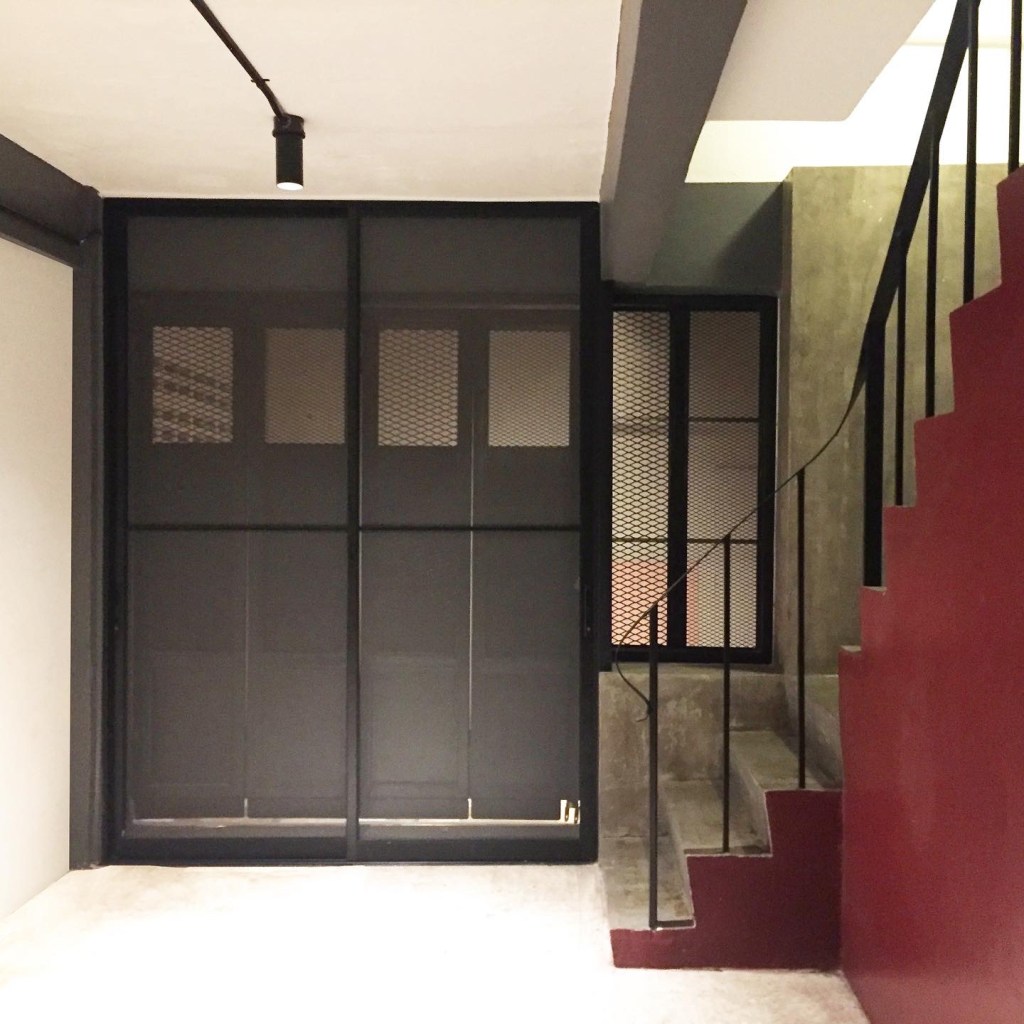
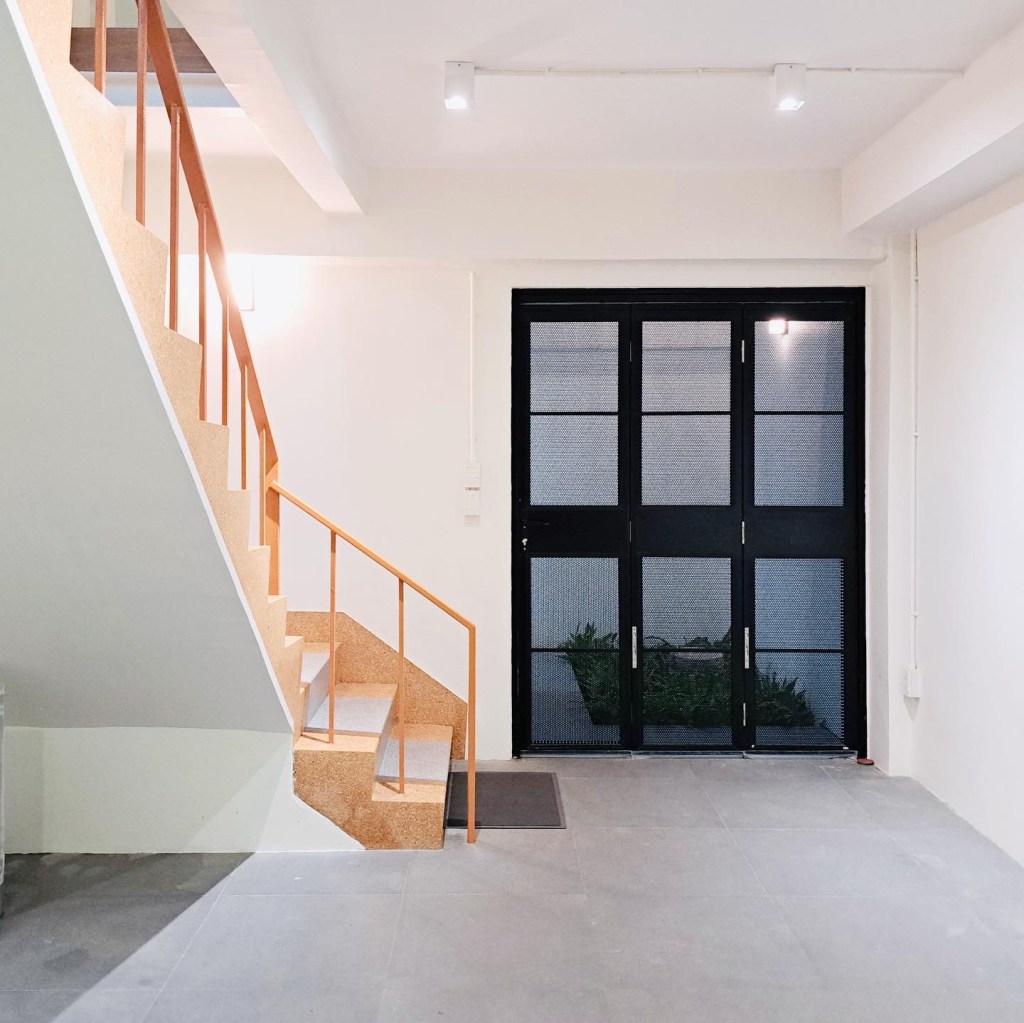
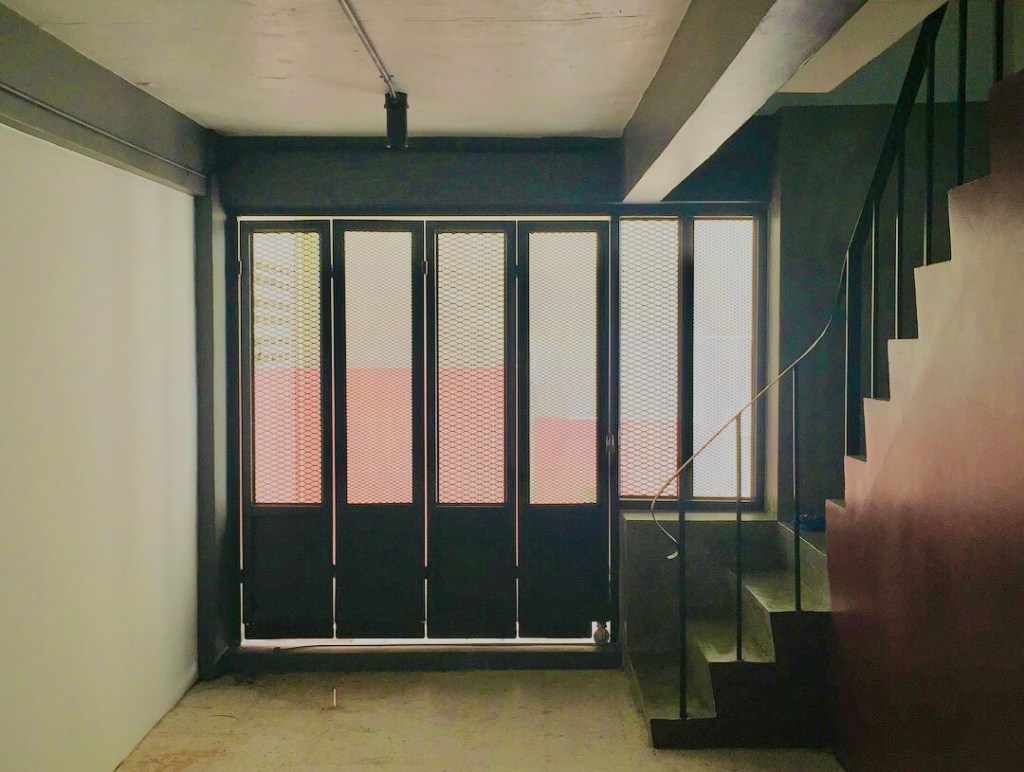
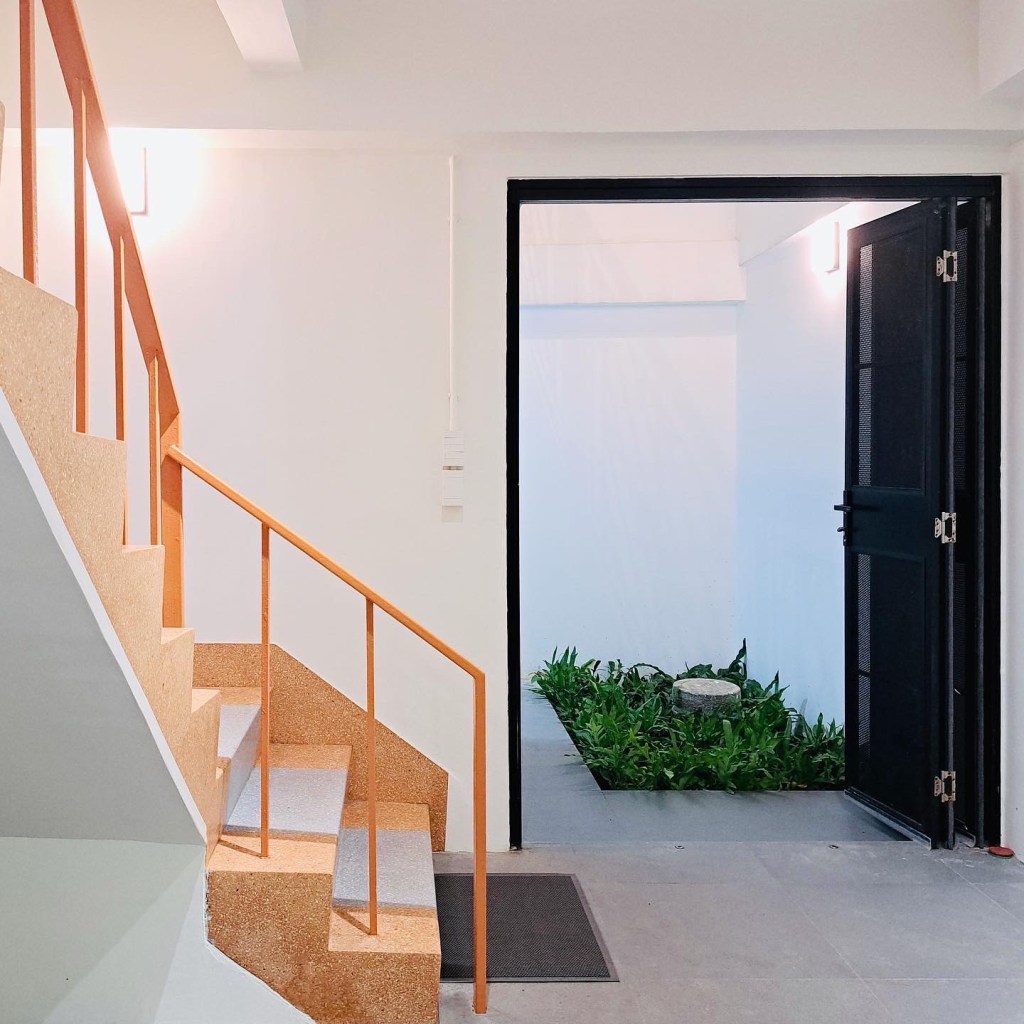
Comparing the staircases and backyards of Prototype 1 and Prototype 2, both prototypes’ backyard, previously covered by an illegally addition of a roof structure, have been opened up to bring natural light in and to let wind flow through the ground floor space to other floors. Pink ceramic tiles from the 1980s-kitchen are kept on the wall of the Prototype 1’s backyard (left).
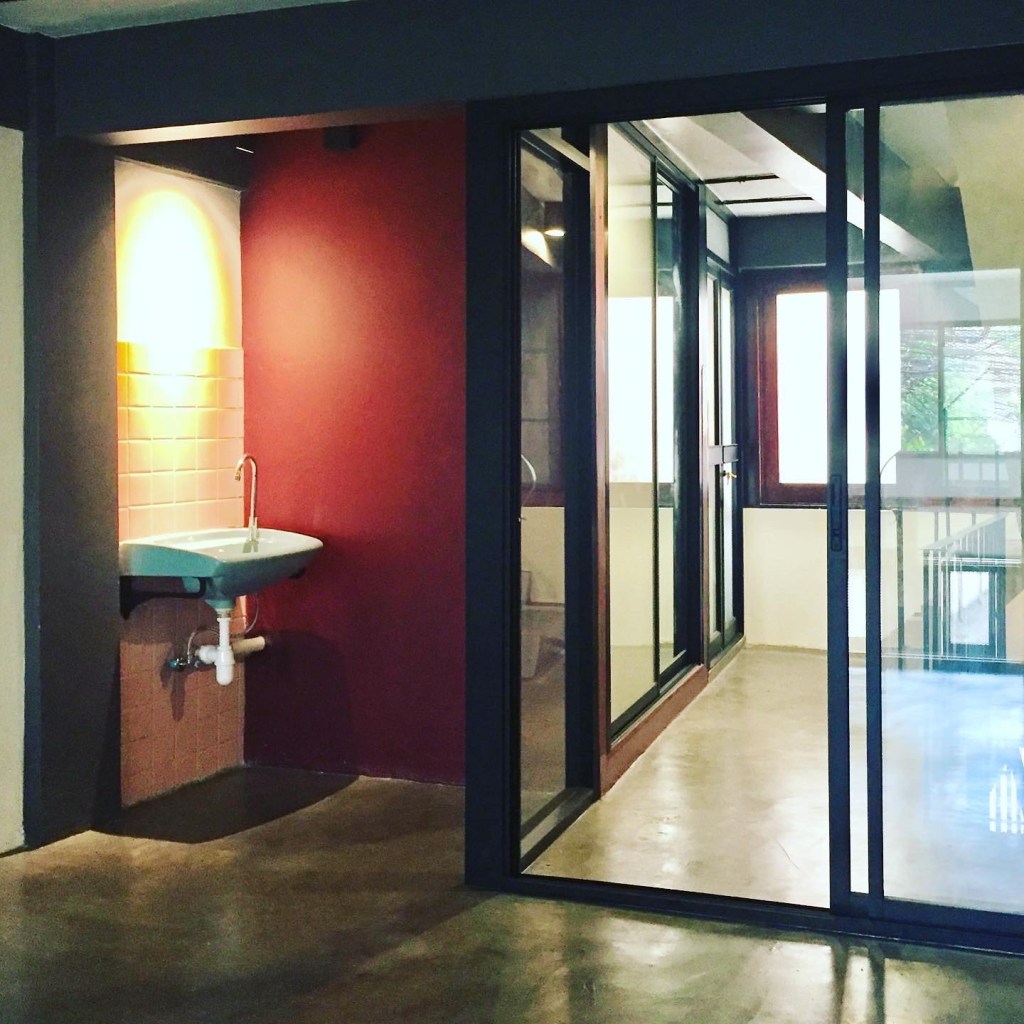
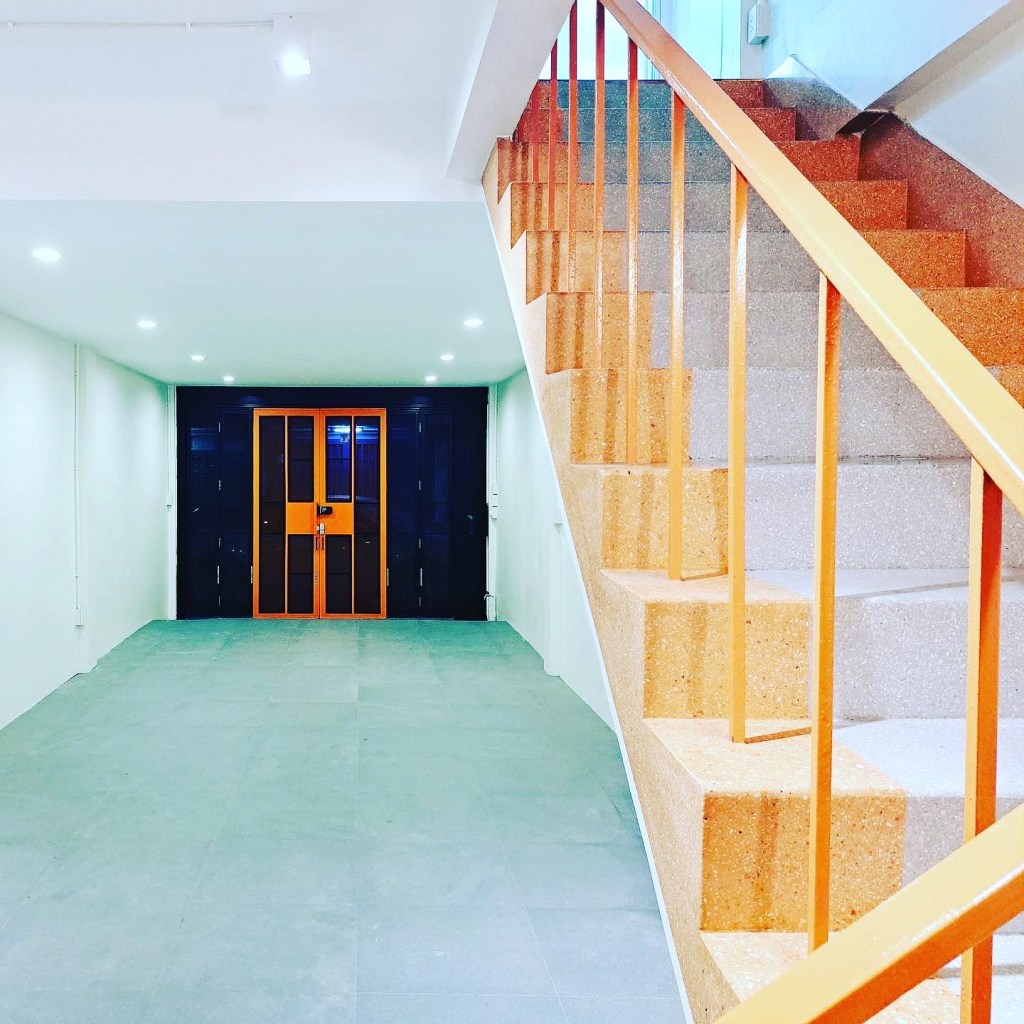
Pink ceramic tiles and a blue wash basin from the 1980s-toilet are also cleaned and maintained at a corner of a multipurpose space on the mezzanine of the Prototype 1 (left). Original orange and grey terrazzo finishings from the 1970s of the Prototype 2’s stairs (right) are cleaned and brighten up. They still vividly serve their purposes well.
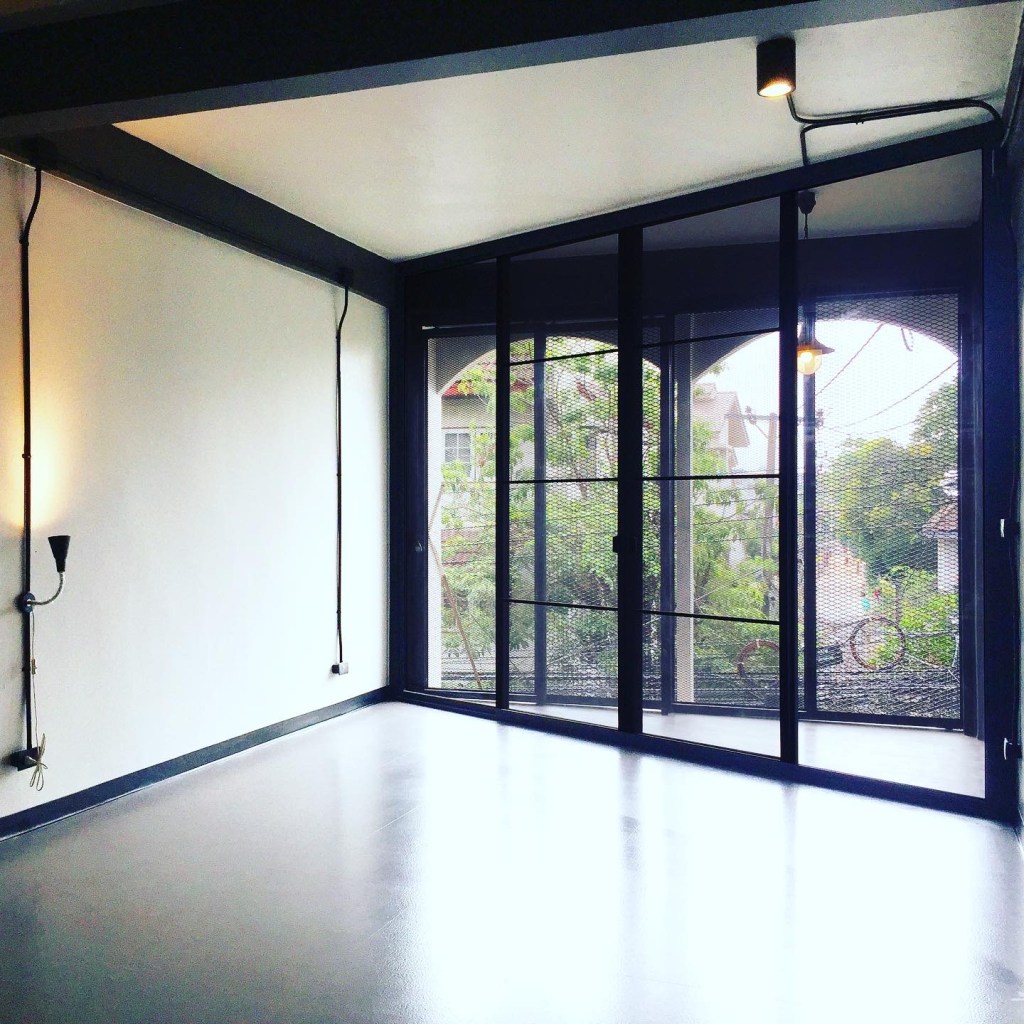
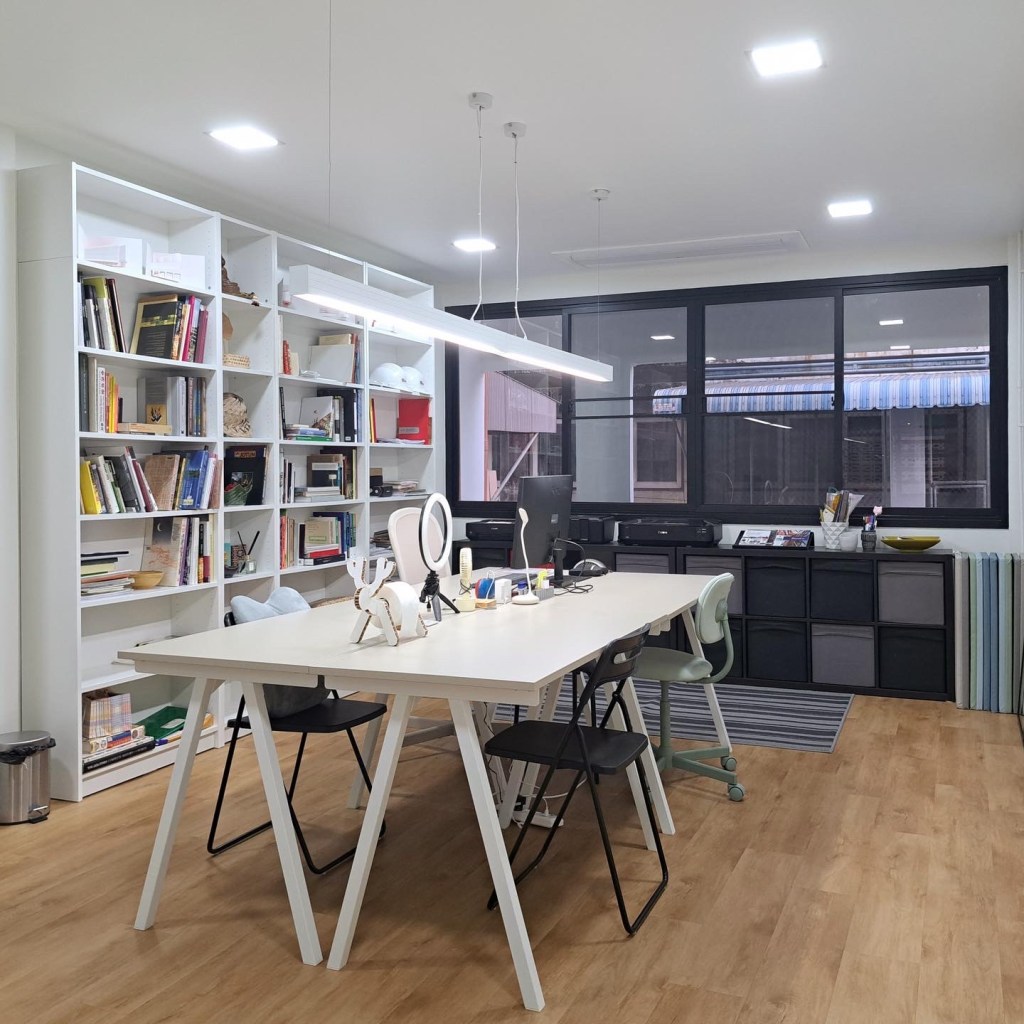
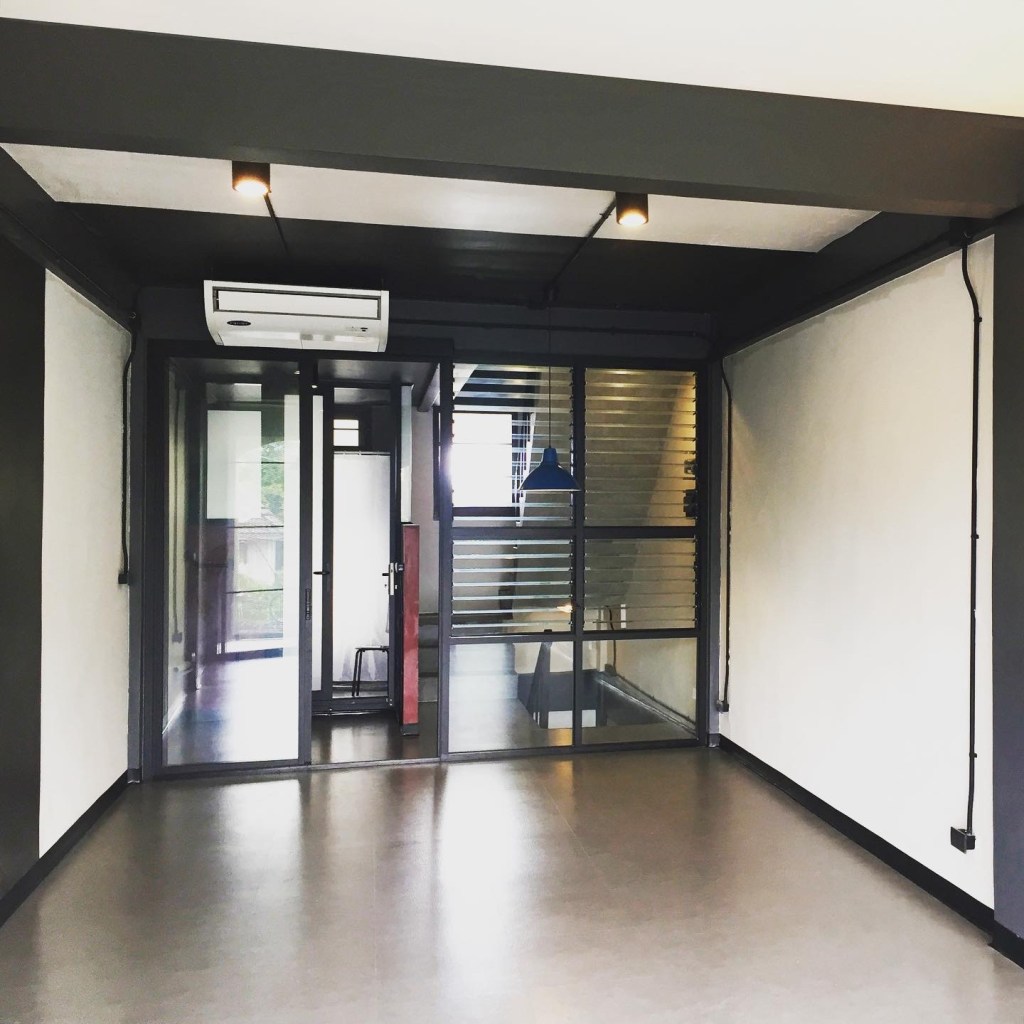
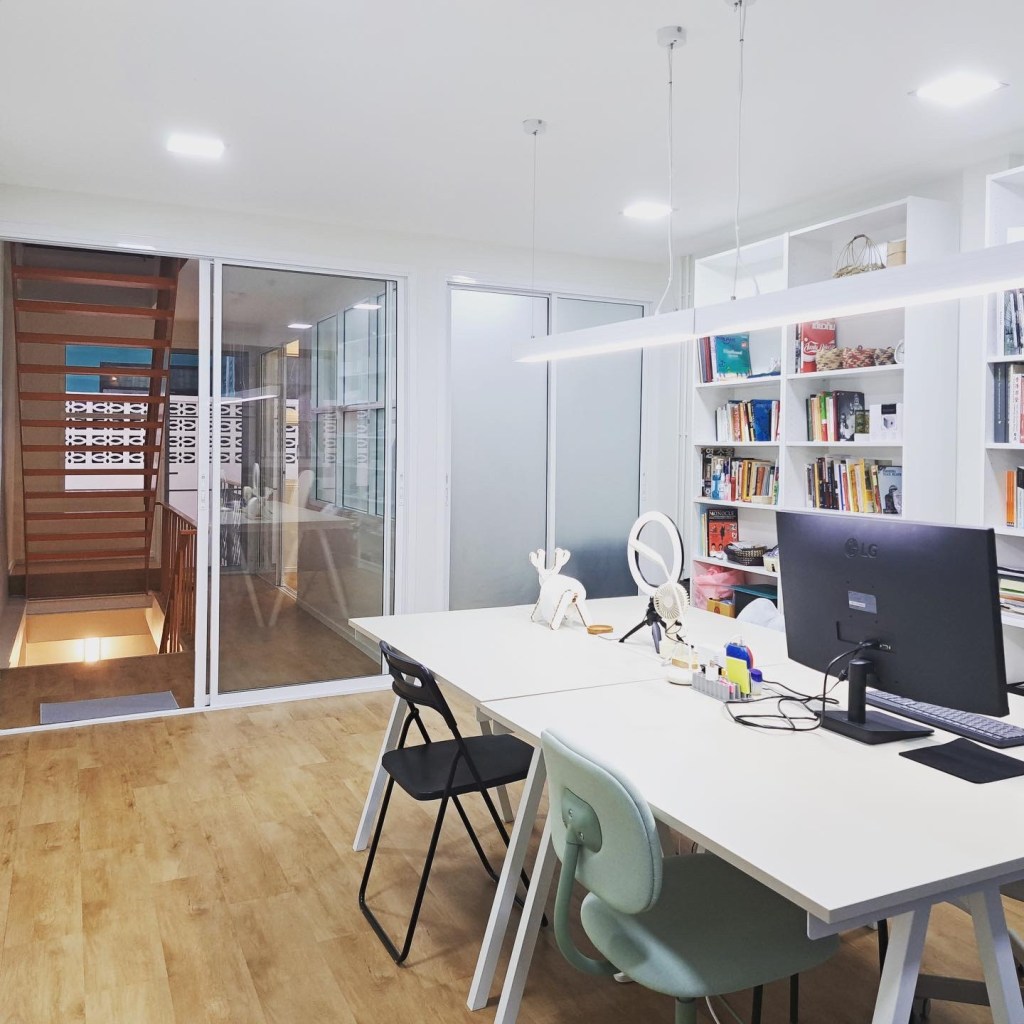
Comparing space organisation of an upper floor of Prototype 1 and Prototype 2, both prototypes have a main space occupying two front bays. The original location of stairs at the rear bay is maintained for the least structural alteration. Therefore, a secondary space exists adjacent to the stairs hall on each upper floor. It locates a toilet and a shower room in Prototype 1 (left) and a pantry in Prototype 2 (right). The original reinforced concrete stairs is maintained in Prototype 1 to avoid structural alteration, while open steel stairs replaces deteriorate wooden stairs in Prototype 2 to enhance ventilation and bring natural light into the space.
At the front facade, both prototypes maintain the original concrete brise-soleil to provide sun shading, privacy, and maintaining a unified character of the facade of the whole row of shophouses.
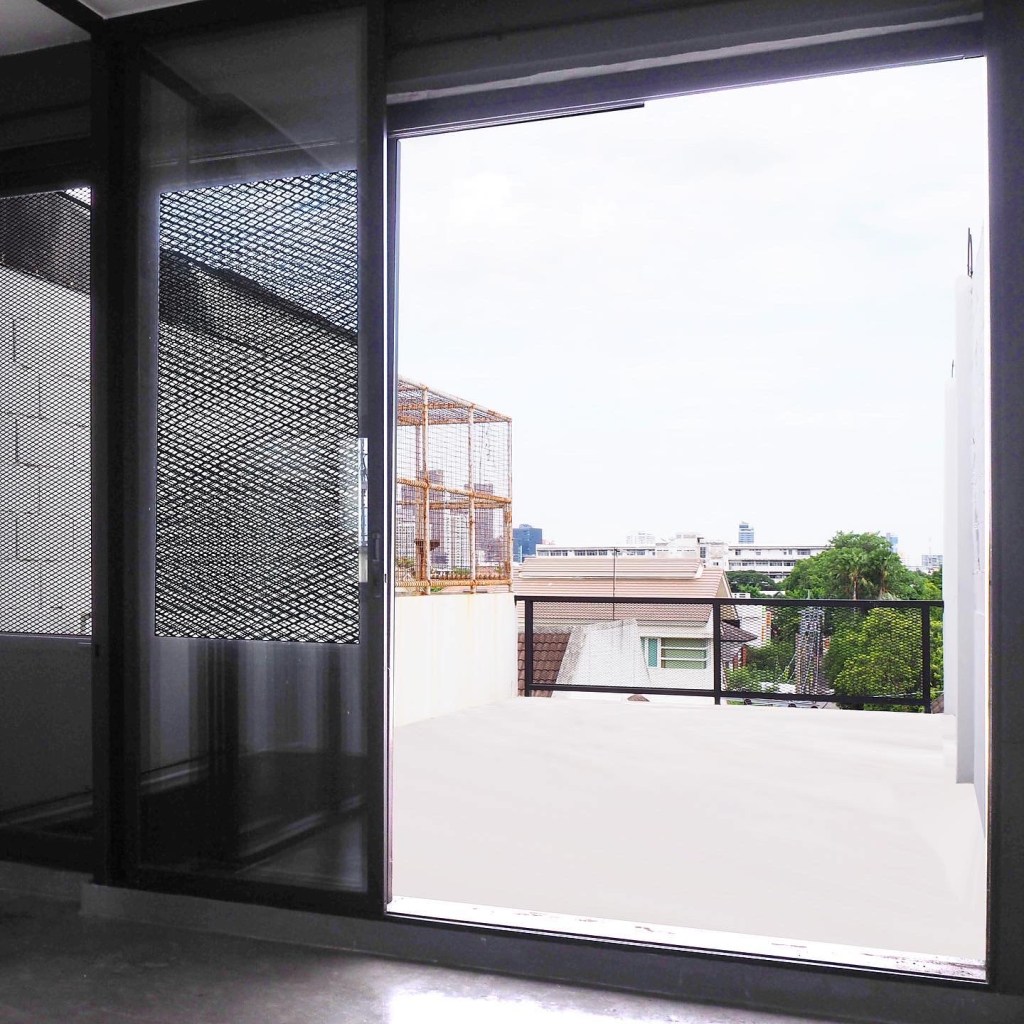
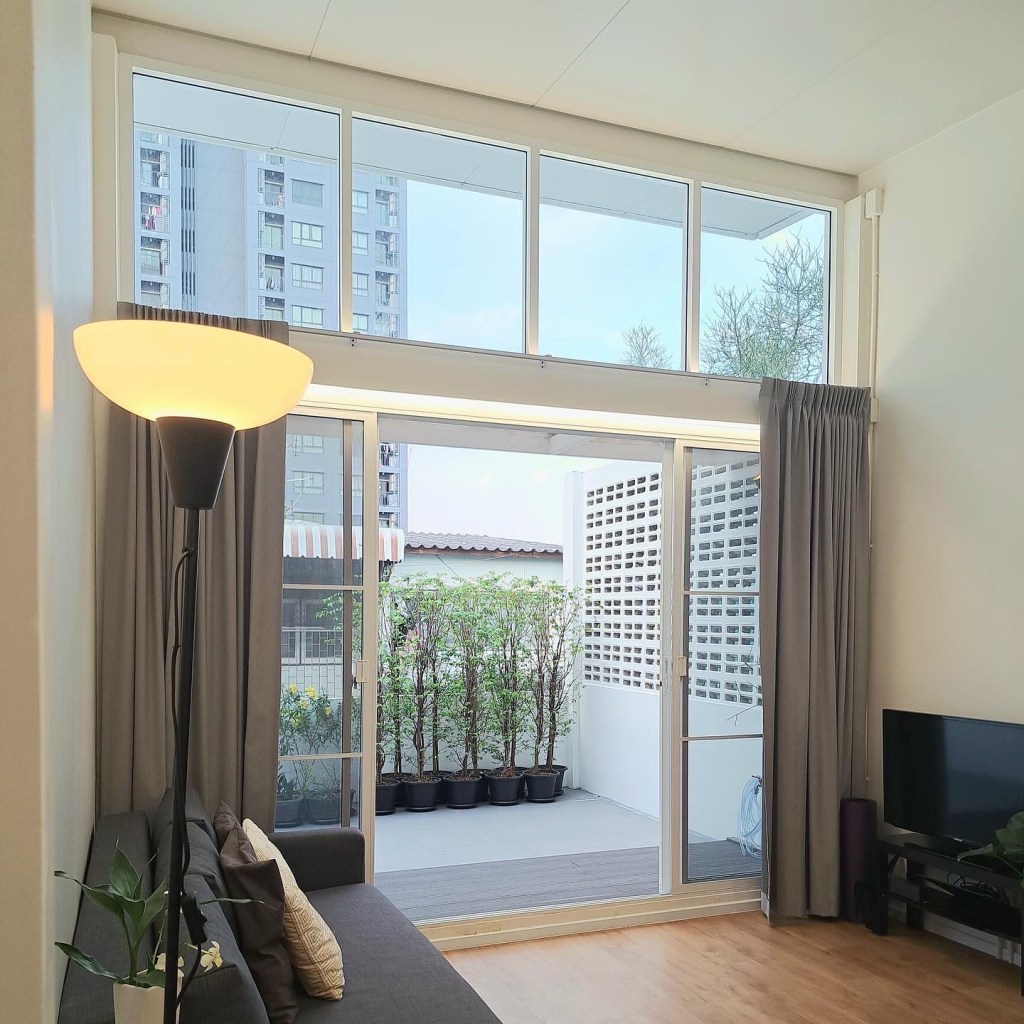
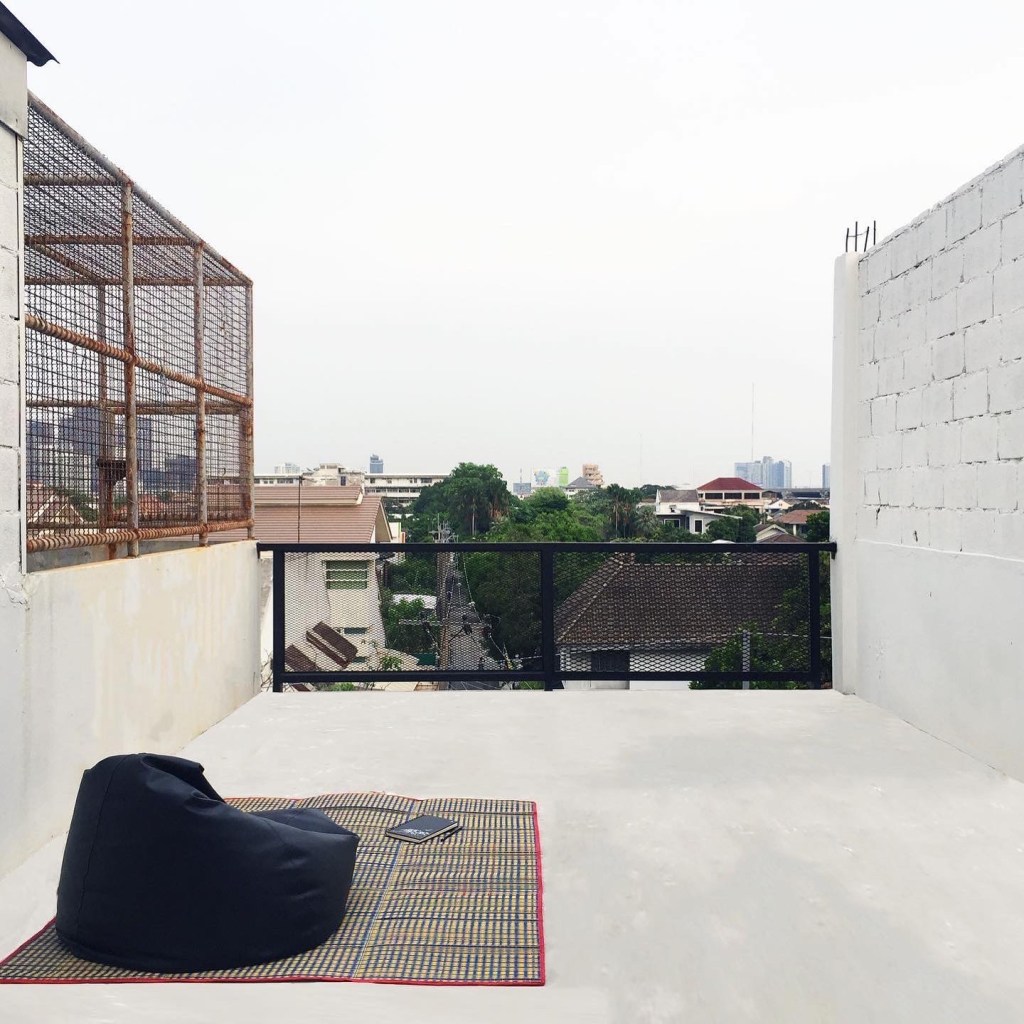
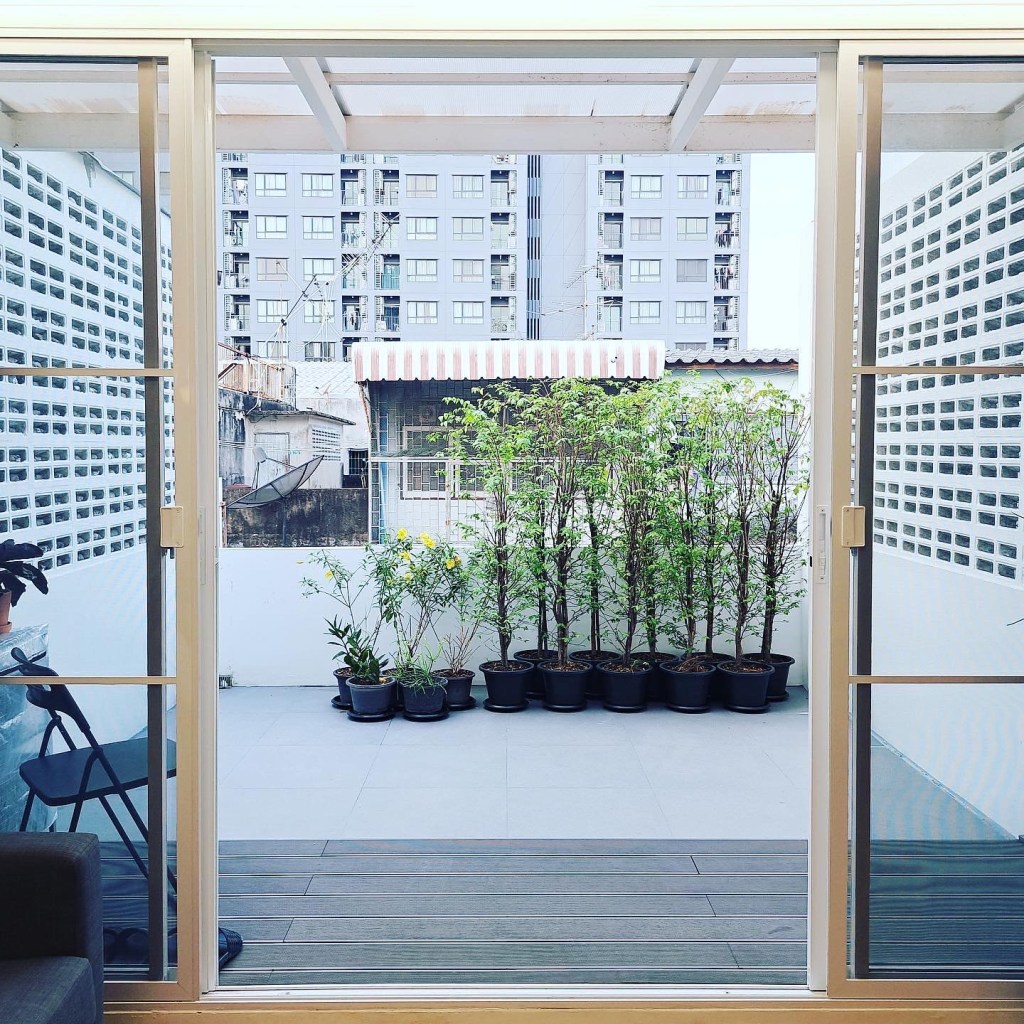
Comparing the top floor of Prototype 1 and Prototype 2, both prototypes originally have a rooftop. On the rooftop, a room with a concrete slab roof at the rear bay of Prototype 1 (left) has been renovated as a multipurpose space connected to the rooftop through new sliding doors. A room on the rooftop of Prototype 2 (right) originally had a deteriorate asbestos roof of wooden structure. It has been renovated into a high-ceiling living room with a new insulated roofing materials spanning the least number of steel frames to minimise loads.
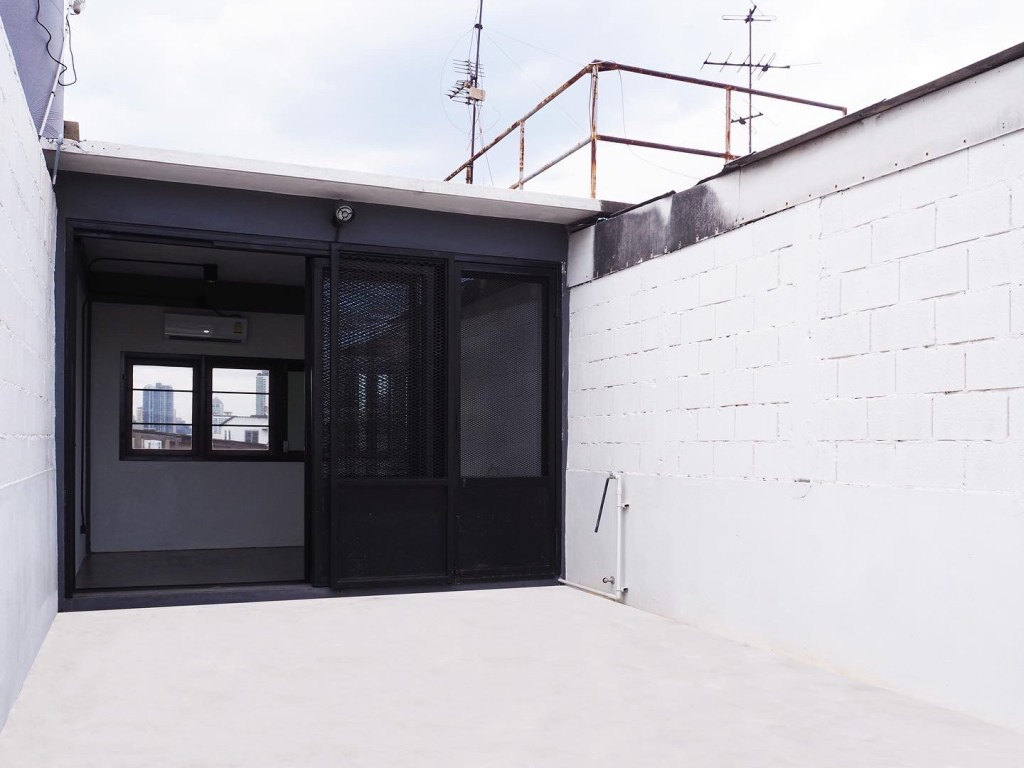

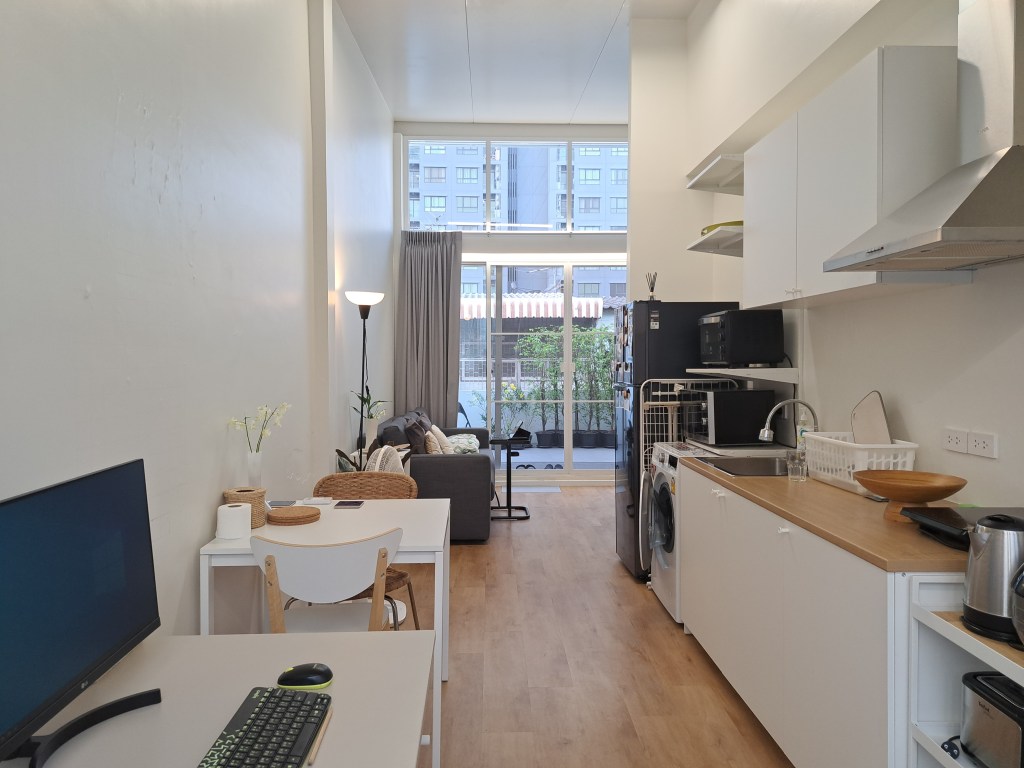
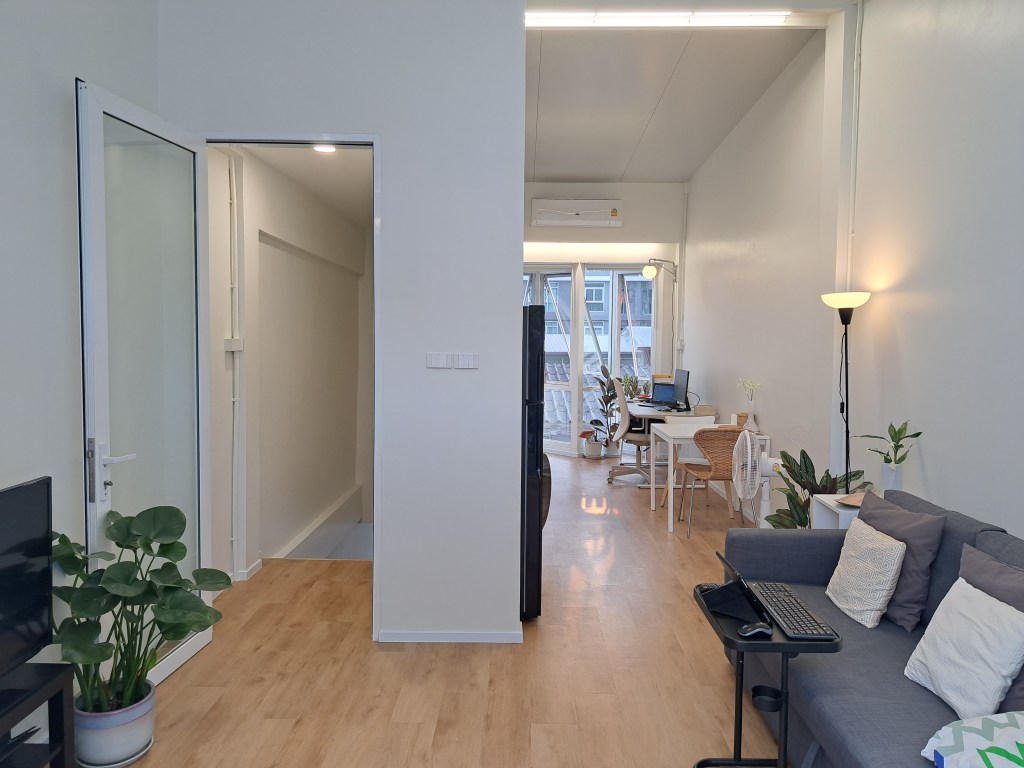
The development of Shophouse2Go! is still ongoing. It aims to make shophouse renovation easy for mass adoption and application. For a scoped-down goal focusing in Bangkok, it aims to allow the Thai capital’s population to have more choices of housing that suit their lifestyle and support their wellbeing. It would challenge the mainstream perception of seeing only the choices of living in a condominium near the center or in a suburban house. It would promote mass renovation of shophouses. By reducing demolition and supporting urban redevelopment, it would potentially help reviving ordinary urban heritage and reducing carbon footprint.
 DRFJ
DRFJ 